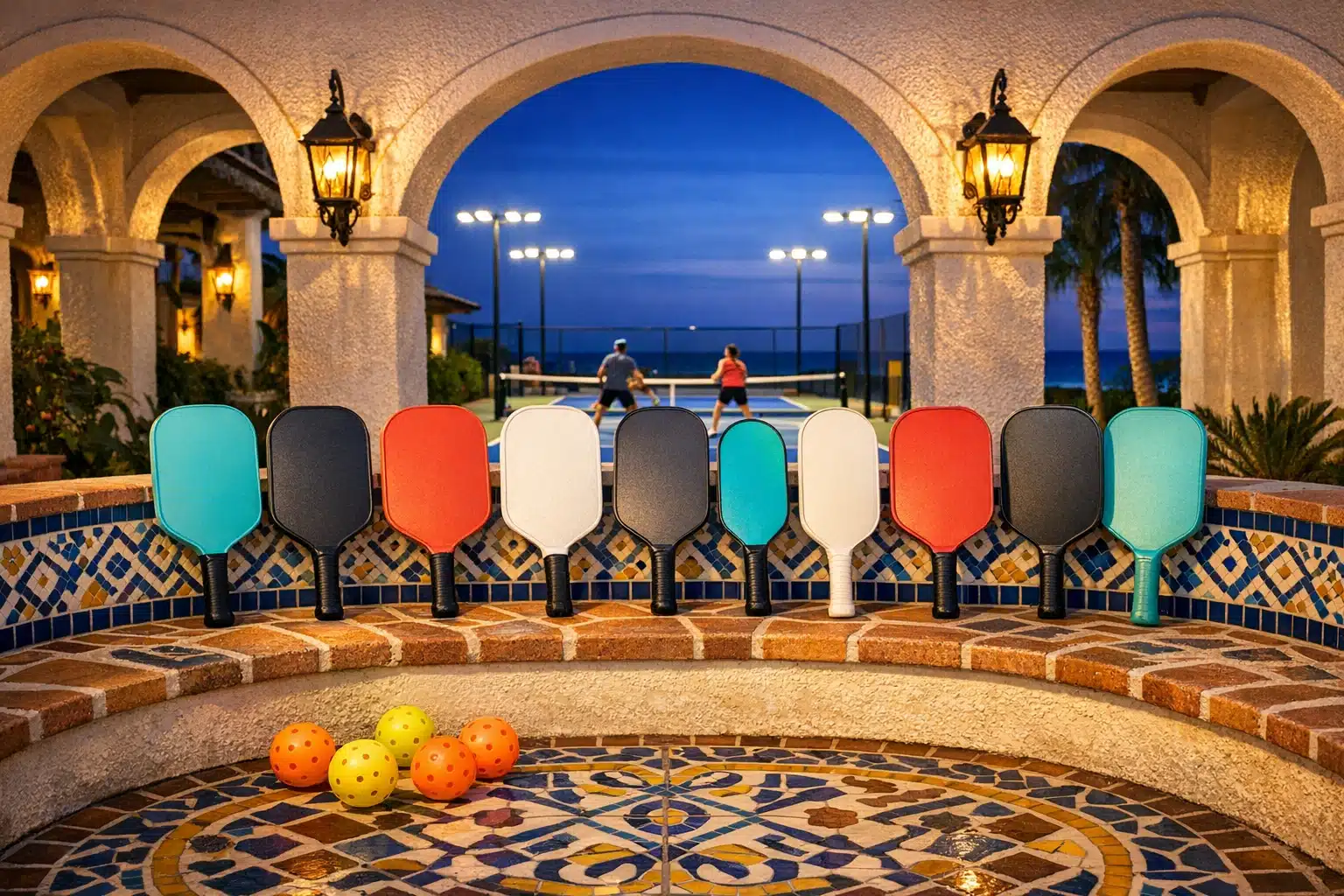
Top 10 Pickleball Paddles Worth Considering This Season
Article Outline
1. What makes a pickleball paddle worth considering and which design features matter most. 2. A detailed look at ten paddles that appeal to different playing styles and skill levels. 3. How paddle weight changes speed, stability, comfort, and shot selection. 4. A clear comparison of graphite and composite paddles, including strengths, trade-offs, and ideal users. 5. A final roadmap to help recreational and competitive players narrow the field and buy with confidence.
Picking a pickleball paddle can feel a bit like choosing a travel companion: the right one fades into your hand, while the wrong one reminds you of itself on every swing. This guide helps you sort through popular models, weight classes, and face materials without getting lost in marketing terms. Explore popular pickleball paddles, compare their features, and learn what to consider when choosing one for your playing style. Whether you value control at the kitchen line or extra pop on drives, the details below will make the decision clearer.
1. What Makes a Pickleball Paddle Worth Considering
Before anyone starts comparing brand names, it helps to understand why paddles can feel so different in actual play. A paddle is not just a flat surface with a handle. It is a blend of shape, weight, balance, face material, core thickness, grip size, and overall construction quality. Those elements affect how quickly you can react at the kitchen line, how much pace you can generate from the baseline, and how comfortable your arm feels after a long session. Two paddles may look nearly identical on a store wall, yet one may suit a patient control player while the other favors someone who attacks with hard drives and fast counters.
For most players, the first useful filter is playing style. If you rely on resets, dinks, and placement, you will usually appreciate a paddle with a larger sweet spot, stable feel, and a control-oriented response. If you like finishing points with aggressive put-aways, you may lean toward a paddle that feels livelier off the face. That said, pure power is not always an advantage. A paddle that launches the ball too easily can make touch shots harder, especially under pressure.
Several design factors matter more than flashy marketing phrases:
- Weight and balance influence hand speed, stability, and fatigue.
- Core thickness often affects control and softness on contact.
- Face material shapes feel, pop, and spin potential.
- Grip size changes comfort and can affect wrist action.
- Shape, including standard or elongated, influences reach and sweet spot distribution.
Another practical point is paddle legality. Tournament players should always verify whether a model appears on the current approved equipment list from the relevant governing body, because certification status can change over time. Recreational players may care less about approval and more about comfort, durability, and price, but even then, buying with a clear purpose is smarter than chasing trends.
The best paddle for you is rarely the one with the loudest reputation. It is the one that supports your habits and smooths out your weaknesses. A quick-handed doubles player may prefer maneuverability over raw force. A singles player may want more reach and put-away power. A newer player may benefit from forgiveness instead of hyper-responsive performance. Once you understand those priorities, brand comparisons start to make sense, and the search becomes less of a guessing game and more of a useful process.
2. Top 10 Pickleball Paddles Worth Considering This Season
No single list can settle the paddle debate for every player, but some models appear repeatedly in serious conversations because they bring a clear identity to the court. The ten paddles below are worth considering not because they fit everyone, but because each one serves a recognizable type of player. Think of this section less as a rigid ranking and more as a guided tour through the current landscape.
1. Selkirk LUXX Control Air Invikta is often discussed by players who prioritize touch, dwell time, and all-court command. Its elongated shape appeals to those who like added reach, while its control-focused personality can reward soft hands and patient construction of points.
2. JOOLA Ben Johns Perseus 16mm has drawn attention for its blend of stability, spin-friendly performance, and modern competitive feel. It tends to appeal to advanced players who want enough pop for offense without giving up too much control in transition.
3. CRBN 3X Power Series is usually mentioned when players want a firmer, more aggressive response. It can suit people who enjoy driving the ball, countering quickly, and adding pressure with pace.
4. Paddletek Bantam ALW-C remains a familiar option for those who want a lively paddle that still feels manageable in hands battles. It has long been associated with a blend of control and punch that appeals to many doubles players.
5. Engage Pursuit Pro EX 6.0 is often praised for a balanced all-court profile. Players who want shape versatility, a solid sweet spot, and reliable spin frequently place it on their short list.
6. Six Zero Double Black Diamond Control has earned attention among players who want a refined control paddle with good feel and modern materials. It often appeals to intermediate and advanced users who spend a lot of time resetting and countering.
7. Gearbox Pro Power Elongated leans toward players looking for a more assertive response. If your game thrives on pressure and point-ending swings, this type of paddle can feel exciting, though it may demand cleaner technique on softer shots.
8. Franklin Signature Pro enters many conversations because it sits near the intersection of competitive features and broad public visibility. It can appeal to players who want modern spin-oriented play without stepping into an overly niche design.
9. Onix Evoke Premier is a good reminder that some paddles remain attractive because they offer dependable feel and a straightforward playing experience. Not every buyer needs the latest surface trend to enjoy a solid match.
10. Head Radical Tour CO is often appreciated by players who want comfort, control, and a generous hitting area. For recreational players moving toward a more intentional playing style, it can be a sensible option.
When comparing these paddles, focus on a few questions rather than reputation alone:
- Do you need faster hands at the kitchen, or more depth on drives?
- Do you prefer a plush, muted feel or a crisp, direct response?
- Do you play mostly doubles, mostly singles, or a blend of both?
- Are you solving for performance, arm comfort, or value?
A paddle list is most useful when it points you toward the right category, not just the most talked-about model. A control-first player can be unhappy with a power paddle, while an aggressive finisher can feel trapped by a paddle that asks for constant restraint. Choosing well means matching the tool to the rhythm of your game.
3. How Paddle Weight Can Affect Your Performance
Weight is one of the first paddle specifications players notice, and for good reason. It affects nearly every phase of a point, from quick exchanges at the kitchen line to heavy topspin drives from deeper in the court. Yet weight is often misunderstood because shoppers treat it as a simple lighter-versus-heavier debate. In reality, performance depends on both total weight and where that weight is distributed.
As a broad guideline, paddles are often grouped into lightweight, midweight, and heavy categories, though the exact cutoffs vary by brand. A lighter paddle generally moves faster through the air. That can help with reaction speed, fast hand battles, and wristy adjustments on dinks or blocks. Players who feel late on counters sometimes discover that a slightly lighter paddle gives them a small but meaningful timing advantage. There is a certain relief in that first clean volley when the paddle no longer feels like a door hinge.
Heavier paddles, on the other hand, usually offer more plow-through and stability. They can feel steadier on off-center contact and may help produce deeper shots with less effort from the player. For drives, serves, and overheads, some players love the grounded sensation of extra mass behind the ball. The trade-off is that greater weight can slow hand speed and may contribute to fatigue over long sessions, particularly for players with elbow, wrist, or shoulder sensitivity.
Balance matters just as much. A head-heavy paddle can feel more powerful but less maneuverable, while a more evenly balanced or handle-biased paddle may feel quicker in close quarters. This is why two paddles with the same listed weight can play very differently. Static numbers tell only part of the story; swing feel completes it.
Here is a practical way to think about weight and performance:
- Lighter paddles often help with hand speed, reaction volleys, and touch adjustments.
- Midweight paddles tend to offer the broadest blend of speed, stability, and comfort.
- Heavier paddles can add depth and solidity, but may demand more strength and endurance.
Your playing environment also matters. In a slower recreational game, a slightly heavier paddle may feel comfortable and controlled. In a fast doubles session filled with firefights, the same paddle may suddenly feel cumbersome. Beginners often benefit from moderate weight because it gives them enough stability without making mechanics harder to learn. Experienced players may choose more specialized options depending on whether they emphasize resets, drives, or counters.
If possible, demoing two weights within a similar paddle family is far more revealing than reading a spec sheet. After ten minutes of dinking, resetting, and defending speed-ups, the difference becomes obvious. Weight is not a side detail; it is one of the clearest links between equipment and actual performance.
4. Graphite vs. Composite Pickleball Paddles
The classic graphite-versus-composite comparison still matters, even though modern paddle design has become more nuanced. Today, many paddles use layered constructions, polymer cores, textured surfaces, and materials that blur simple labels. Even so, the traditional distinction gives players a useful starting point because it points to differences in feel, responsiveness, and intended use.
Graphite paddles are generally known for a crisp, responsive feel. The face material is thin and relatively stiff, which can create a direct connection between paddle and ball. Many players describe graphite paddles as quick, clean, and precise. They often appeal to players who value control, quick reactions, and a lighter overall sensation in the hand. At the kitchen line, that crispness can feel efficient and predictable, especially for players who like compact strokes and fast exchanges.
Composite paddles, by contrast, typically use a face made from blended materials such as fiberglass-based composites, and they are often associated with a slightly softer or more textured response. Many players find that composite constructions offer easier power and a more forgiving feel. Depending on the face and texture, they may also help create more spin or a longer sense of ball dwell time. For players who want the paddle to contribute more pace or feel a bit more plush on contact, composite options can be attractive.
Still, this comparison is not as tidy as it once was. Some modern paddles marketed for spin and control use carbon-based surfaces that are distinct from older graphite designs. Others combine elements in ways that make the old labels feel incomplete. That is why the smartest approach is to treat graphite and composite as broad personality types rather than absolute technical boxes.
A simple comparison helps:
- Graphite: often crisp, quick, control-friendly, and maneuverable.
- Composite: often more powerful, more forgiving, and sometimes more textured in feel.
- Modern hybrids: can borrow traits from both categories, so demos and reviews matter.
Which one should you choose? If your game is built on precision, resets, and fast hands, a graphite-style response may feel more natural. If you want easier depth, added pop, or a slightly softer sensation, a composite paddle may suit you better. Arm comfort can also influence the decision, since feel on impact varies from model to model. The best material is not the one with the flashiest description. It is the one that supports the way you construct points, absorb pace, and finish rallies under real pressure.
5. Final Buying Advice for Recreational and Improving Players
If you are shopping for a new pickleball paddle, the smartest move is not to ask which paddle is universally best. The better question is which paddle will help you play your current game more effectively while still leaving room to improve. That distinction matters because many players buy with ambition alone and end up with equipment that demands more precision than they can consistently deliver. A paddle should challenge you a little, but it should not turn every third shot into a negotiation.
For beginners and steady recreational players, a balanced midweight paddle with a comfortable grip and a forgiving sweet spot is often the most practical choice. It will usually make it easier to learn touch, establish control, and avoid unnecessary strain. If you are already playing several times a week and actively working on transition play, counters, and spin, then it makes sense to start exploring more specialized paddles. At that stage, subtle differences in face feel and stability become easier to notice and more valuable.
A simple buyer checklist can help narrow the field:
- Choose control first if you lose points through inconsistency more than lack of power.
- Choose extra pop only if your mechanics are stable enough to manage a livelier face.
- Pick weight based on comfort in fast exchanges, not just how strong your serve feels.
- Consider shape carefully, since elongated paddles add reach but may change sweet spot feel.
- Check approval status if you play tournaments or plan to enter them soon.
Budget also deserves honesty. Premium paddles can be excellent, but price does not guarantee a better fit. A less expensive paddle that matches your hand speed and control needs can outperform a high-end model that clashes with your instincts. Demo programs, club borrow sessions, and side-by-side testing are often more valuable than another hour of scrolling through opinions online.
For the target audience of this guide, especially recreational players, league regulars, and improving intermediates, the goal is simple: buy a paddle that helps you play cleaner points and enjoy the game longer. Focus on fit over hype, feel over branding, and long-session comfort over short-test excitement. When your paddle complements your style, the game feels less cluttered. You stop thinking about the tool and start noticing the openings, the angles, and the quiet little chances that turn a rally in your favor.