 Artificially generated image
 Top Filipino Massage Services
A Roadmap to Filipino Healing Traditions
Filipino massage traditions carry more than the promise of rest; they bring together touch, observation, ritual, and community memory. In a fast-moving world that often treats wellness as a trend, practices such as Hilot and Ventosa offer a grounded alternative shaped by lived experience. Their appeal lies not only in physical comfort but also in the way they connect healing to culture, place, and everyday life.
Explore Filipino massage traditions, including Hilot, Ventosa and Dagdagay, and learn about different techniques for relaxation and wellness.
This article begins with an outline because these practices deserve context before technique. A reader may arrive looking for a spa recommendation, a cultural introduction, or a better understanding of why certain Filipino treatments feel so different from a standard oil massage. The answer usually lies in their purpose. Rather than focusing only on comfort, many traditional methods aim to assess imbalance, ease strain, restore movement, or help the body settle after fatigue. In homes, community clinics, and modern wellness centers, those goals often overlap.
- First, the guide explains why Filipino massage traditions remain relevant today.
- Next, it looks closely at Hilot and the role of the skilled practitioner.
- Then, it examines Ventosa, a local take on cupping that combines heat, suction, and movement.
- After that, it turns to Dagdagay and the broader cultural atmosphere surrounding relaxation in the Philippines.
- Finally, it offers practical advice for readers who want to try these services with realistic expectations.
That structure matters because Filipino wellness is not one single system. Hilot is often described as traditional therapeutic bodywork, Ventosa is known for cup-based suction work, and Dagdagay uses sticks or bamboo tools on the soles of the feet. They can appear in different regions, family traditions, and spa menus in slightly different forms. Even so, they share a common thread: healing is treated as something personal, sensory, and attentive. A session may include oil, warmed hands, herbal scents, quiet conversation, or careful listening to how the body responds.
Modern interest in these methods has grown for several reasons. Travelers increasingly seek experiences that reflect local culture rather than generic treatment menus. Many Filipinos also value traditional care as part of family heritage, especially when it is offered alongside modern health habits instead of in opposition to them. At the same time, reputable practitioners are more careful about explaining limits. Massage can support comfort, circulation, stress reduction, and body awareness, but it is not a replacement for diagnosis or urgent medical care. That balanced view makes the topic both timely and worth reading with curiosity.
Hilot Massage: Traditional Healing Through Skilled Touch
Hilot is often the first practice mentioned when people talk about Filipino therapeutic massage, yet reducing it to “just another massage style” misses the point. Traditionally, Hilot is associated with the manghihilot, a practitioner who uses touch, observation, and experience to locate tension, stiffness, or what many describe as imbalance in the body. In older settings, Hilot could be part of household care, especially in communities where healing knowledge was passed down rather than taught in a formal classroom. Today, it appears in homes, clinics, and spas, sometimes in its more traditional form and sometimes adapted for modern wellness environments.
A Hilot session usually emphasizes responsive touch. Instead of following a fixed routine from shoulder to ankle, the practitioner often searches for areas that feel unusually tight, cool, inflamed, or restricted in movement. Coconut oil is commonly used, and some practitioners include herbal oils or warmed leaves depending on training and local custom. The pace may shift from slow gliding strokes to focused pressure around the back, hips, shoulders, or limbs. What makes the experience memorable is not brute force but attentive reading of the body. Good Hilot often feels less like a performance and more like a conversation conducted through the hands.
Several features distinguish Hilot from more standardized Western spa treatments:
- Assessment comes first, with attention given to how the body feels and moves.
- Pressure is often targeted rather than evenly distributed.
- Traditional oils and local materials may be part of the session.
- The treatment can feel therapeutic even when the setting is simple.
From a health perspective, people commonly seek Hilot for muscle fatigue, stress, body soreness, or a lingering sense of heaviness after travel and work. Some also value it after physical exertion because it encourages relaxation and improved mobility. Scientific research specific to Hilot is still limited compared with conventional physical therapy or widely studied massage modalities, so claims should be kept realistic. It may help with comfort, tension relief, and a sense of bodily ease, but it should not be marketed as a cure for serious illness.
There is also a cultural layer that explains why Hilot continues to matter. Imagine a quiet room with the faint scent of coconut oil, a woven cloth on the table, and a practitioner who asks not only where it hurts, but how you have been carrying your week. That detail captures the heart of Hilot. It treats the body as lived experience, not as a checklist of sore muscles. For many readers, that is precisely why traditional healing remains compelling in the present day.
Ventosa Therapy: Cupping with a Twist
Ventosa is often introduced as Filipino cupping, but the local version has its own character and rhythm. The treatment generally uses glass cups, heat, and oil to create suction on the skin. In many sessions, the cup is not only placed and left in position; it may also be moved across the back in a gliding technique sometimes called ventosa masaje. That is the “twist” that makes the therapy stand out for many first-time clients. Instead of feeling like a static procedure, it becomes a moving blend of suction, pressure, and sliding contact.
The session commonly begins with oil applied to the skin, followed by brief heat preparation inside the cup before placement. As the cup seals, it gently lifts the skin and underlying tissue. Some practitioners keep the cups still over tight areas, while others move them along muscle lines to address broad stiffness. People usually describe the sensation as unusual at first: part pulling, part release, occasionally intense, yet often satisfying when performed carefully. Temporary circular marks can appear afterward, and those marks are a normal result of suction rather than bruising from impact.
Ventosa is often used for practical reasons that sound familiar to modern readers:
- back or shoulder tightness after long hours of sitting
- muscle fatigue linked to repetitive work
- a desire for deeper relief than light massage provides
- stress-related tension that feels “stuck” in the upper body
Comparisons with other forms of cupping are helpful. Chinese cupping, sports cupping, and other regional traditions also use suction, but Filipino Ventosa often appears in a more hybrid format alongside massage strokes and localized bodywork. That combination can make it feel less clinical and more integrated into the overall treatment. Research on cupping in general suggests there may be short-term benefits for pain relief or muscle tension in some cases, yet evidence remains mixed and methods vary widely. That means responsible practitioners should present Ventosa as supportive care, not guaranteed medical treatment.
Safety matters here. Ventosa may not be suitable for everyone, especially people with fragile skin, clotting disorders, recent injuries, active inflammation, or conditions that require direct medical evaluation. A trustworthy provider should ask basic health questions, explain the possibility of marks, and adjust pressure according to comfort. When done well, Ventosa feels like a practical folk technology refined through repetition: simple tools, skilled timing, and a method that turns heat and glass into a focused kind of relief.
Relaxation with a Cultural Flavor: Dagdagay, Ritual, and the Senses
If Hilot speaks through the hands and Ventosa works through suction, Dagdagay introduces rhythm. Originating from the Cordillera region, Dagdagay is a foot massage technique that traditionally uses rounded sticks, often bamboo, to tap, roll, and press the soles. The movement may look modest from a distance, yet the sensation can be remarkably specific. Each stroke travels across pressure points and sensitive areas of the foot, creating a treatment that feels at once playful, grounding, and precise. For people who carry stress in their legs or spend hours walking, standing, or commuting, Dagdagay can be especially memorable.
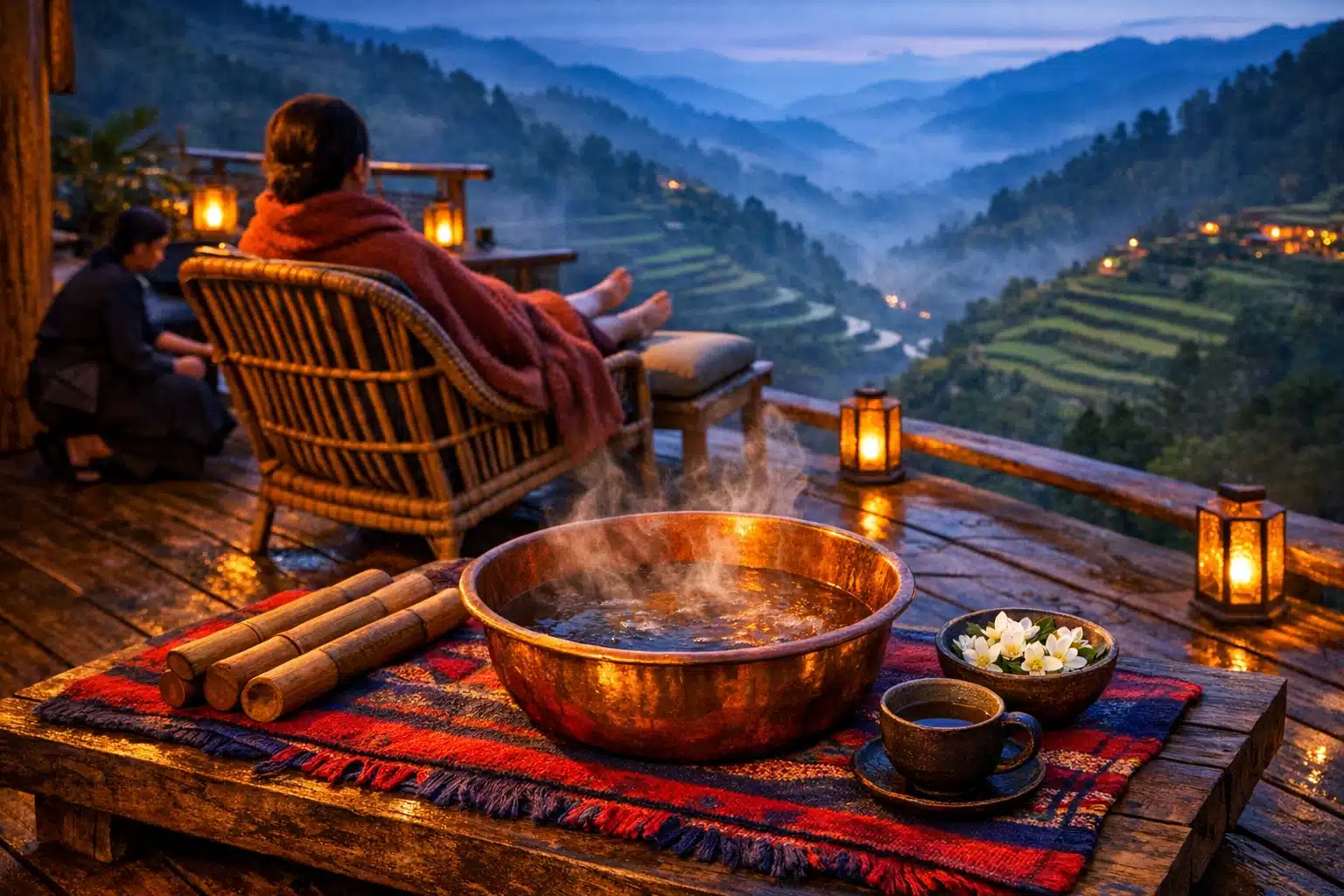
What makes this form of relaxation distinct is the atmosphere surrounding it. Filipino wellness traditions rarely exist as detached procedures. They often arrive with sensory cues: the warmth of oil, the scent of herbs, the sound of low conversation, the sight of woven décor, or the feeling that the treatment belongs to a place rather than a global template. In a polished spa, those details may be curated. In a home-based setting, they may be entirely natural. Either way, the result is a kind of cultural texture that adds meaning to the physical experience.
Readers exploring this topic should pay attention to the different layers at work:
- Technique: how pressure, tapping, and pacing create specific sensations.
- Setting: whether the service is offered in a family practice, clinic, or resort spa.
- Tradition: the local story attached to the method.
- Expectation: whether the goal is deep therapy, calm relaxation, or both.
Dagdagay also helps illustrate an important point about Filipino massage services: not every treatment aims for the same result. Some focus on back pain, some on muscular heaviness, and some on restoring ease through the feet, which many traditions treat as a meaningful map of bodily tension. Formal research on Dagdagay is limited, so it is best understood through heritage, user experience, and observation rather than sweeping scientific claims. That does not make it trivial. It makes it local, lived, and worthy of careful description.
There is a small beauty in the way these practices slow the room down. A traveler may arrive expecting a checklist item and leave with a stronger memory of cadence, scent, and human attention. That is the cultural flavor at the center of Filipino relaxation. It is not decoration added after the fact. It is part of the treatment itself, shaping how the body interprets touch and how the mind understands rest.
Choosing the Right Experience and What Today’s Reader Should Remember
For anyone interested in trying Filipino massage services, the most useful approach is curiosity paired with common sense. Traditional treatments can be deeply rewarding, but the quality of the experience depends on the setting, the practitioner’s skill, and your own needs. A luxury spa may present Hilot or Ventosa in a polished format with clear intake procedures, while a small local provider may offer a more intimate and tradition-rooted experience. Neither is automatically better. The right choice depends on whether you want heritage immersion, structured comfort, targeted muscle work, or a mix of all three.
Before booking, it helps to ask a few direct questions:
- What does the treatment involve from start to finish?
- Is the service focused on relaxation, therapeutic pressure, or both?
- Will marks appear after Ventosa?
- Are there health conditions that should be mentioned in advance?
- How is the practice adapted for first-time clients?
Those questions are not awkward; they are signs of a responsible client. Good practitioners usually welcome them because traditional wellness works best when expectations are clear. If you have recent surgery, severe pain, skin conditions, pregnancy-related concerns, or any unexplained symptoms, medical guidance should come first. Massage can complement self-care, but it should not delay proper treatment. This is especially important for readers who are drawn to cultural healing because it feels more personal. Personal care is valuable, yet it still benefits from professional boundaries.
There is also a practical aftercare side worth noting. After Hilot or Ventosa, some people prefer to drink water, rest briefly, and avoid intense exertion for the remainder of the day. After Dagdagay, comfortable walking and light stretching can help extend the sense of looseness in the feet and legs. None of these steps are dramatic, but they reinforce the idea that bodywork is part of a wider routine rather than a stand-alone miracle.
For travelers, spa-goers, and readers simply looking for better ways to unwind, the main takeaway is clear. Filipino massage traditions offer more than generic pampering. Hilot brings intuitive therapeutic touch, Ventosa adds a bold cupping-based method, and Dagdagay shows how focused footwork can carry regional character. Together, they create wellness experiences with texture, history, and emotional warmth. If you want relaxation that feels connected to people and place, these traditions are worth exploring with respect, attention, and realistic expectations.