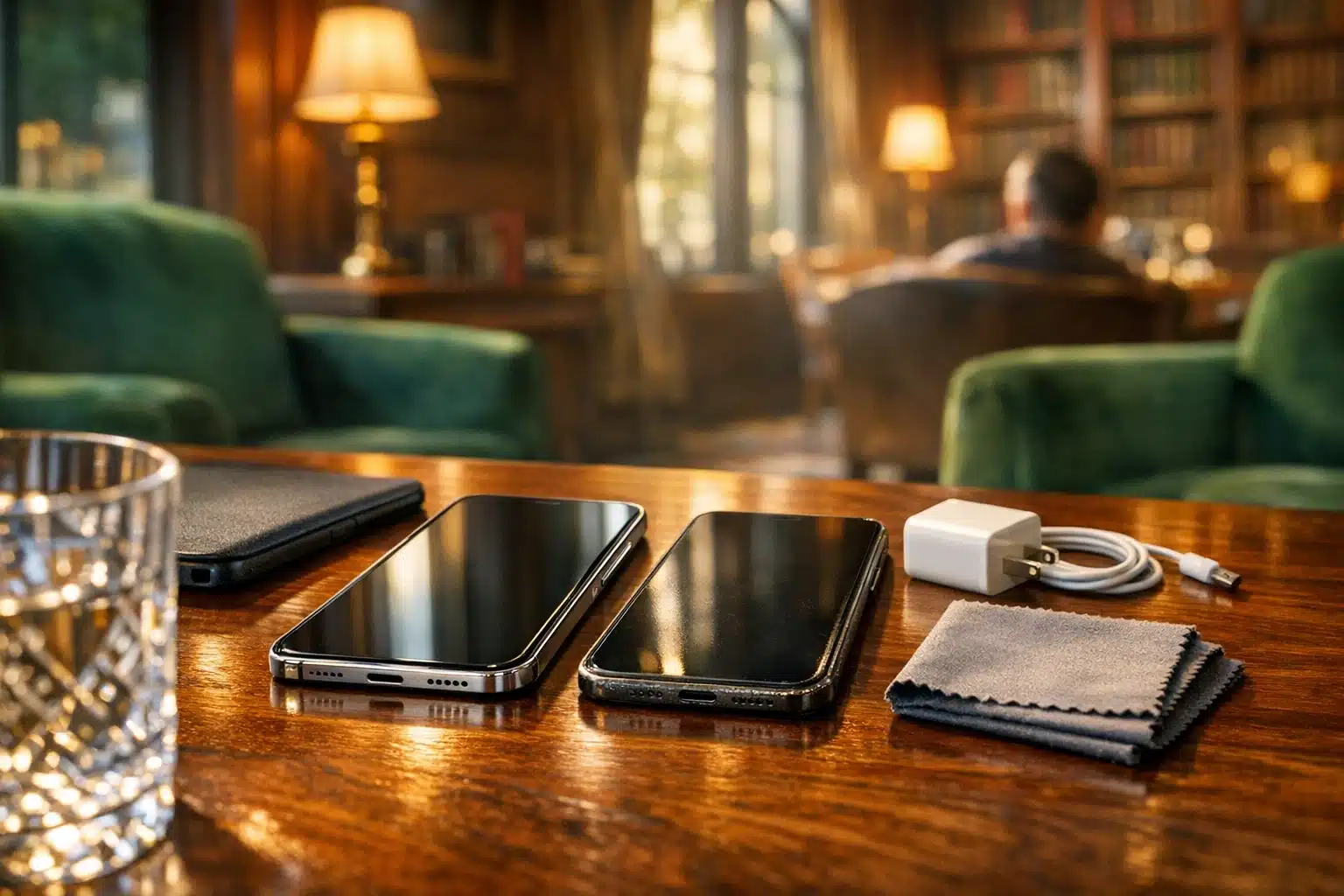
 Artificially generated image
 The Rise of Second-Hand Phones: Are They the Right Choice for You?
A second-hand phone can feel like a clever shortcut: lower cost, less electronic waste, and access to models that once sat far above your budget. Yet the used market has its own dialect, and labels such as grade, unlocked, refurbished, and battery health can hide major differences in value. One listing may become a reliable companion for work, photos, and travel, while another turns into a slow parade of repairs and compromises. Learning how to read those signals is what separates a satisfying deal from an expensive lesson.
Outline
- Why second-hand phones have become a serious option for practical buyers
- How condition grades work and why the same label can mean different things
- What compatibility and unlock status really tell you about daily usability
- Which risks deserve space in your budget before you commit
- A simple framework for deciding whether a used device fits your needs
Why More Buyers Are Looking at Second-Hand Phones
The appeal of a second-hand phone is easy to understand. New smartphones, especially mid-range and flagship models, can cost hundreds of dollars, and many premium devices now launch above the price point that once belonged only to laptops. For a buyer who mainly wants dependable messaging, good battery life, decent photos, and solid app performance, paying full retail is not always necessary. A used device can bring those everyday benefits within reach at a noticeably lower price.
That lower price is only one part of the story. Smartphones lose value quickly in the first year or two, even when they still perform very well. This creates a sweet spot in the market: devices that are no longer new, but still powerful enough for streaming, navigation, banking apps, social media, and work communication. A two-year-old phone can still feel fast in daily use, especially if it came from a strong product line with good software support. In that sense, buying used is often less about settling and more about timing your purchase intelligently.
There is also a practical sustainability angle. Extending the life of electronics reduces waste and delays another manufacturing cycle. That does not mean every used purchase is automatically green or wise, but it does mean a good resale market helps devices stay useful longer instead of gathering dust in a drawer. For some buyers, that matters almost as much as the savings.
Still, the second-hand market is not one neat shelf with identical products. You may be comparing:
- a phone sold directly by its previous owner
- a trade-in device cleaned and tested by a retailer
- a certified refurbished unit with limited warranty
- a marketplace listing with few details and no returns
Those routes carry different levels of risk, support, and transparency. A private seller may offer the lowest price, while a professional refurbisher may give you testing records, return windows, and clearer grading notes. The cheapest option can be smart, but only if the hidden costs stay hidden because they do not exist.
📱 Considering a second-hand phone? Explore prices, condition grades, battery health and other important features before choosing. 🔎
Think of the used-phone market like a busy train station. The destinations may look similar on the board, but the routes, delays, and comfort levels are not the same. A little patience at the beginning usually saves money, stress, and buyer’s remorse later.
Grades and What They Actually Mean
Condition grades are supposed to help buyers compare devices quickly, but they often create false confidence. The reason is simple: there is no single universal grading standard across all stores and marketplaces. One seller’s “Excellent” may look nearly new, while another seller uses the same word for a phone with visible scratches on the frame and light marks on the screen. Grades are useful, but they are shorthand, not truth.
Most grading systems focus first on cosmetics, not on long-term performance. Labels such as Grade A, Excellent, Like New, Very Good, Good, or Fair usually describe visible wear. A higher grade often means fewer scratches, less frame damage, and a cleaner display. A lower grade may still function properly, but show scuffs, dents, worn coating, or minor screen marks. The important catch is that appearance and reliability are related, yet not identical. A spotless phone can still have a tired battery, while a visibly worn one may run perfectly well.
Here is a practical way to read common grades:
- Like New or Excellent: minimal cosmetic wear, often the closest to a giftable device
- Very Good or Grade B: light signs of use, usually the best balance of price and appearance
- Good: noticeable wear that should be reflected in the price, but still suitable for daily use
- Fair or Grade C: clear cosmetic damage and potentially shorter remaining lifespan, better for backup use or strict budgets
Battery condition deserves separate attention because it changes the real value of any grade. Lithium-ion batteries wear down over time, and after years of charging, capacity drops. A phone with 85 percent battery health may still be fine for moderate users, while anything much lower can mean shorter screen time, slower performance under load, or a near-term replacement expense. Some sellers provide battery percentages; others avoid the topic entirely. When that number is missing, ask.
“Refurbished” adds another layer of confusion. It does not always mean factory renewed. Sometimes it means the phone was cleaned, tested, and reset. Sometimes it means parts were replaced. Sometimes it only means it powers on and passes a short checklist. That is why buyers should look past the headline and ask what was actually done. Was the battery replaced? Was the screen original? Is the water resistance still reliable after repair work? Are all cameras, microphones, speakers, and biometric features working?
In the used-phone world, a single adjective can quietly move a price by a meaningful amount. Read the grade as the start of the conversation, not the end of it. Photos, battery details, repair history, and return terms tell the fuller story.
Compatibility and Unlock Status
A phone can be affordable, attractive, and highly rated, yet still be the wrong purchase if it does not work well on your network. That is why compatibility and unlock status deserve more attention than many buyers give them. These details sound technical, but they affect the basics: whether you can activate the device, use mobile data, make calls reliably, and take advantage of features such as 5G, Wi-Fi calling, or eSIM.
Start with the word “unlocked.” An unlocked phone is not restricted to a single carrier, which is helpful, but it does not automatically mean universal compatibility. A device can be unlocked and still support only some frequency bands used in your country or by your provider. This matters most when comparing regional versions of the same model. A phone made for one market may lack certain bands elsewhere, which can weaken signal quality or remove access to faster data speeds.
There are several compatibility checkpoints worth reviewing before you buy:
- Carrier compatibility with your specific network
- Support for local 4G and 5G bands
- Physical SIM, dual SIM, or eSIM requirements
- Voice features such as VoLTE and Wi-Fi calling
- Regional software limitations or missing language options
It is also wise to confirm that the phone is free of account locks and blacklisting issues. A device can be carrier-unlocked and still be blocked because it was reported lost, stolen, or unpaid under a financing agreement. Likewise, activation locks tied to a previous owner’s account can make a phone unusable even if the hardware itself is fine. Reputable sellers usually confirm clean status, and many carriers or device databases let you check an identifier before purchase.
Another often-missed factor is future usability. A phone that technically works today may still be a poor fit if software support is close to ending. Security updates matter, especially for banking, email, and other everyday tools that handle personal information. Older devices can remain useful, but buyers should weigh the remaining update window against the discount.
The smoothest route is simple: match the exact model number, not just the marketing name, to your carrier and region. Ask the seller for that number if it is missing. A phone is not truly a bargain if you spend the first week hunting for signal, adapters, or workarounds. In this part of the buying process, clarity beats optimism every time.
Risks Worth Budgeting For
The purchase price of a second-hand phone is only the beginning of its real cost. Smart buyers leave room for follow-up expenses, because used electronics often arrive with a few chapters already written. Some of those chapters are harmless, like a small scratch near the charging port. Others can become expensive, like a weak battery, an aging screen, or a microphone problem that appears after the return window closes.
Battery replacement is one of the most common costs to anticipate. Even when a phone looks excellent on the outside, the battery may have already done years of quiet work. If the seller does not provide a battery figure, assume uncertainty has a price. Depending on the model and repair provider, a battery replacement can add a meaningful amount to your total cost. The same is true for screens. Display repairs on modern phones, especially premium models, can be surprisingly expensive because the panel, touch layer, and related components are often integrated.
Other expenses are smaller but still worth counting:
- a new charger or cable if none is included
- a case and screen protector for immediate protection
- shipping, insurance, or return postage
- setup costs if you need help transferring data
- repair quotes for worn ports, weak speakers, or faulty cameras
There is also the risk of non-original replacement parts. A phone may work, yet an aftermarket screen or battery can affect brightness, touch response, color accuracy, battery life, or durability. That does not make every third-party part bad, but it should influence the price you are willing to pay. Water resistance is another subtle issue. Once a phone has been opened for repair, the original seal may no longer perform as it did when new.
A useful budgeting habit is to set aside a contingency amount, often around 10 to 20 percent of the purchase price, especially when buying from a private seller or a marketplace listing with limited return support. That reserve helps you stay realistic. A bargain can whisper very sweetly from the screen, but repair bills tend to speak in a firmer voice.
Finally, consider the cost of inconvenience. If the phone is your main device for work, school, travel, or family communication, even a few days of downtime can matter. In that case, paying a little more for a tested device, a warranty, or a return window may be the more economical choice overall.
A Practical Buying Plan and Final Thoughts for Everyday Buyers
Once you understand grades, compatibility, and likely risks, the used-phone market becomes far less mysterious. The goal is not to find a mythical perfect deal; it is to find the right balance between price, condition, and confidence. For most buyers, that means resisting extremes. The rock-bottom listing may carry too many unknowns, while the near-new option may be priced so high that buying new starts to make sense.
A simple buying plan can keep your decision grounded. Before paying, compare the full offer rather than the headline price alone. A slightly more expensive phone may actually be the better value if it includes stronger battery health, a clean compatibility record, a clear return policy, and proof of testing. The difference between a decent purchase and a frustrating one often lives in those supporting details.
Use a checklist like this when comparing listings:
- Confirm the exact model number and network compatibility
- Ask whether the phone is carrier-unlocked and account-free
- Review the stated condition grade alongside real photos
- Check battery health, repair history, and included accessories
- Read warranty terms, return deadlines, and seller feedback
- Estimate a realistic total cost with a repair or accessory buffer
Used phones tend to suit certain buyers especially well. They are often a strong choice for students, budget-conscious families, people who need a reliable secondary device, and users who care more about function than launch-day novelty. They can also be ideal for shoppers who want a formerly premium model with a better camera or display than a brand-new budget phone offers at the same price.
On the other hand, buying new may be the better path if you need maximum battery life, the longest software support window, full warranty coverage, or total peace of mind. There is no universal winner here. The right choice depends on how long you plan to keep the phone, how sensitive you are to cosmetic wear, and how much uncertainty you are willing to manage.
For the average buyer, the best conclusion is straightforward: second-hand phones can be an excellent choice when you shop with patience and verify the details that actually affect ownership. If you treat grades as clues, compatibility as non-negotiable, and risks as costs to plan for, you give yourself a far better chance of ending up with a device that feels smart to own, not just cheap to buy.