 Artificially generated image
 Luxury Hotel Rooms with Hot Tubs: Are They Worth It?
A room can be more than a place to sleep; on the right trip, it becomes part of the reason for going. Luxury stays with private jacuzzis and spacious hotel suites appeal to travelers who want calm, comfort, and a sense of occasion without guessing what they are paying for. This guide looks at when those upgrades truly add value, how to compare options, and what details separate a memorable night from an overpriced one. A few practical checks can save money and disappointment.
Article Outline
– Why luxury stays continue to attract modern travelers and what people are really paying for
– How a private jacuzzi changes the in-room experience through privacy, comfort, and recovery
– The main suite categories, their differences, and how to compare them fairly
– Booking strategies that reduce risk and help match price with expectations
– A practical conclusion on who benefits most from upgrading and when a standard room makes better sense
The Real Appeal of Luxury Stays
Luxury accommodation has lasting appeal because it offers something many travelers cannot easily create for themselves: uninterrupted ease. A polished lobby matters, but the real value of a premium stay usually appears in the quieter details. Better sound insulation can make city traffic feel distant. Larger bathrooms can turn rushed routines into a slower, more pleasant ritual. Higher floors, thoughtful lighting, and stronger housekeeping standards often produce a sense of calm that standard rooms struggle to match. In other words, guests are not simply paying for marble surfaces or a stylish armchair near the window. They are paying for fewer compromises.
That matters even more on short trips. When someone is away for only one or two nights, every hour counts. A cramped room can make luggage, dining, work calls, and rest feel crowded together. A suite or premium room gives those activities breathing room. A separate sitting area allows one guest to read while another sleeps. A generous bathroom supports a slower morning before a wedding, anniversary dinner, or flight home. Small conveniences build into a noticeably smoother stay, and that is often what travelers remember.
There is also an emotional side to luxury that should not be ignored. People frequently book upscale rooms for milestone moments: birthdays, proposals, reunion trips, or simply a pause after a demanding season at work. A well-designed suite can feel cinematic in the best way. Curtains open, city lights stretch outward, the bath fills, and for a moment the day stops asking anything from you. That feeling is not imaginary, yet it should still be assessed practically.
Useful signs that a luxury stay offers substance rather than branding include:
– clear room dimensions listed in square feet or square meters
– multiple recent photos showing bathroom, bed area, and view
– details on bedding quality, soundproofing, and in-room technology
– staff support such as concierge service, flexible check-in options, or better housekeeping coverage
Price, of course, remains the key question. Premium rooms can cost significantly more, especially in resort areas or on weekends. Still, value is not measured only by the nightly rate. If a better room improves sleep, privacy, convenience, and the overall tone of the trip, the upgrade can be reasonable. For many travelers, the smartest way to judge luxury is simple: ask whether the room will merely impress you for ten minutes, or serve you well for the entire stay.
What a Private Jacuzzi Actually Adds
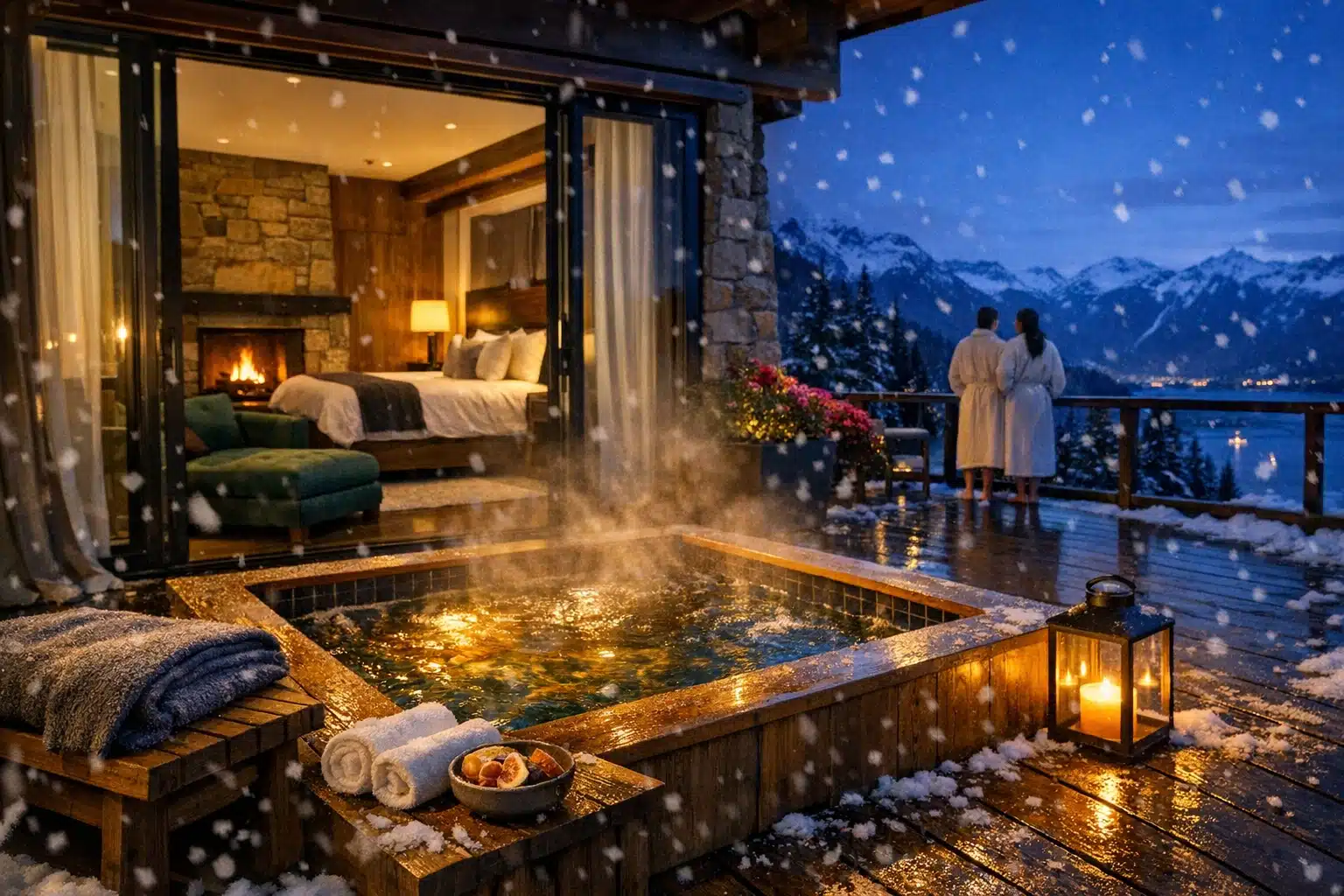
The idea of a private jacuzzi is easy to romanticize, but its practical appeal is just as important as its visual charm. Shared spa facilities can be excellent, yet they come with schedules, other guests, noise, and occasional awkwardness. An in-room jacuzzi replaces that with control. You choose the temperature, timing, music, lighting, and company. After a long flight, a winter walk through a cold city, or an intense day of sightseeing, that control can feel less like indulgence and more like genuine recovery.
Explore the benefits of luxury hotel rooms with hot tubs, from privacy and relaxation to booking tips and suite comparisons.
Privacy is the most obvious advantage. Many travelers want the relaxation of hydrotherapy without moving through public corridors in a robe or waiting for a crowded spa to quiet down. For couples, that privacy supports intimacy without performance. For solo travelers, it creates a space to decompress fully. For parents traveling without children for the first time in months, it may feel like rediscovering silence. The warm water, steady jets, and enclosed setting can help relax tense muscles, especially after walking-heavy itineraries. In many hotels, hot tubs are maintained at temperatures that encourage comfort without the harsh intensity some public whirlpools have.
Still, not every in-room tub is equally appealing. Some properties use the phrase “jacuzzi” loosely when the feature is simply an oversized soaking tub with jets. That can still be enjoyable, but expectations should be accurate. Before booking, it helps to confirm:
– whether the tub is fully private and inside the room or on a balcony
– if the jets are operational year-round
– whether the hotel has quiet hours or terrace-use restrictions
– how frequently the tub is cleaned and inspected
– whether hot water capacity supports a full, comfortable soak
There is also a sensory dimension that photos rarely communicate. A private jacuzzi can change the pacing of a stay by encouraging guests to remain in the room and enjoy it fully. Instead of treating the hotel as a storage box for luggage, travelers may order dessert, open a book, and settle into the evening. That can make a one-night stay feel much longer. The strongest case for an in-room hot tub, then, is not just luxury for luxury’s sake. It is the ability to turn downtime into a meaningful part of the trip rather than the leftover space between activities.
Understanding Hotel Suites Before You Book
The word “suite” sounds straightforward, but hotels use it with remarkable flexibility. In one property, a junior suite may simply mean a larger room with a small sofa. In another, it may include a clear division between sleeping and living areas, upgraded bathroom fixtures, better views, and access to private lounges. This is why suite shopping should start with the layout, not the label. Names are marketing tools; floor plans tell the truth.
At the lower end of the suite spectrum, a junior suite usually offers more square footage and an open-plan arrangement. It works well for travelers who want extra room without paying for a fully separated apartment-style space. Executive suites often add a distinct sitting room, a work area, and sometimes a guest bathroom, which makes them useful for business travelers or couples staying several nights. Signature, presidential, or penthouse suites may add panoramic views, terraces, dining areas, premium welcome amenities, and highly personalized service. These categories can be excellent, but the price jump is often dramatic and is not always necessary unless the occasion truly calls for it.
When comparing hotel suites, focus on how the room will be used. A honeymoon couple may value privacy, bath design, and lighting more than a formal dining table. A family may need a sofa bed, door separation, and storage. A remote worker may care most about desk size, power outlets, quiet, and internet reliability. One traveler’s dream suite can be another traveler’s expensive mismatch.
Key comparison points include:
– actual room size rather than descriptive adjectives
– true separation between living and sleeping areas
– number and style of bathrooms
– window placement and natural light
– view category and floor level
– included benefits such as breakfast, lounge access, or late checkout
It is also wise to remember that some standard rooms in newer luxury hotels outperform older suites in dated properties. Age, maintenance, and design quality matter more than category alone. A beautifully renovated premium room with excellent bedding, strong climate control, and a well-planned bathroom may provide more satisfaction than a large but tired suite with worn furniture. The best suite is not the grandest option on the website. It is the one whose space, amenities, and atmosphere fit the purpose of your trip with the least friction.
Booking Tips That Protect Your Budget and Expectations
Upgrading to a luxury room with a hot tub or suite becomes far more rewarding when the booking process is careful. Too many disappointing stays begin with assumptions made from flattering photographs. Hotels naturally present their best angles, often using wide lenses, sunset lighting, and sparse staging. None of that is dishonest by itself, but it means guests should verify details before paying a premium. The more expensive the room, the less room there should be for uncertainty.
Start with the official room description, then compare it with guest reviews and traveler photos. Look for repeated comments rather than isolated praise or complaints. If multiple guests mention weak jet pressure, dated fixtures, limited privacy on the terrace, or noise from elevators, those points deserve attention. The same is true in a positive direction. Repeated mentions of spotless bathrooms, strong housekeeping, comfortable mattresses, and helpful staff usually indicate consistent quality.
It also helps to understand pricing patterns. In many city hotels, moving from a standard room to a junior suite can raise the nightly rate by roughly 25 to 60 percent, while resort properties may widen that gap sharply on weekends or holiday dates. Booking during shoulder season often improves value because the rate difference can narrow while service levels remain high. Flexible cancellation policies are worth prioritizing too, especially when comparing premium rooms across several properties.
Before confirming, ask practical questions:
– Is the hot tub available all year, or is it affected by maintenance or weather?
– Is the room recently renovated?
– Does the suite include lounge access, breakfast, or transfer service?
– Are there resort fees, parking costs, or service charges not shown at first glance?
– Can the hotel note a quiet-room request or a preferred floor?
One smart tactic is to calculate value per usable hour rather than per night alone. If you arrive late, leave early, and spend most of the day outside the hotel, a major upgrade may not deliver enough return. On the other hand, if the room is central to the trip, the premium can make excellent sense. Travelers celebrating something special should also watch for packages that include dining credits or spa access, since these sometimes provide better overall value than booking each element separately. The best booking strategy is not chasing the lowest price. It is matching the room to the trip with clear eyes and enough information to avoid expensive surprises.
Who Should Upgrade? A Practical Conclusion for Real Travelers
So, are luxury hotel rooms with hot tubs worth it? For the right traveler, absolutely. For the wrong trip, not at all. The answer depends less on status and more on intention. If the room is meant to be a meaningful part of the experience, then paying more for privacy, space, and a private jacuzzi can be a sound decision. If the hotel is simply a base between packed activities, a standard room in a well-run property may be the smarter choice.
Couples on romantic breaks often get the clearest benefit from these upgrades. A suite with a separate lounge, attractive lighting, and a private hot tub creates a self-contained retreat that can make even a short stay feel substantial. Travelers celebrating anniversaries, proposals, or birthdays may also find the premium worthwhile because the room itself becomes part of the memory. Parents escaping for one quiet weekend may value the stillness just as much as the amenities. In those cases, comfort is not decorative; it shapes the whole trip.
Business travelers can benefit too, though in a different way. When meetings, calls, and jet lag collide, extra space can improve focus and recovery. A real seating area helps separate work from rest. A hot tub may ease the stiffness that comes from flights and long event days. Still, some business guests will gain more from lounge access, breakfast efficiency, and late checkout than from the bath itself.
A luxury upgrade is usually most worthwhile for:
– special occasions where the room is part of the event
– short, high-impact getaways where atmosphere matters
– longer stays that benefit from extra living space
– travelers who genuinely plan to use the tub, terrace, or suite features
On the other hand, travelers on fast itineraries, tight budgets, or activity-heavy schedules should be selective. There is little sense in paying for a panoramic suite if you will return only to sleep. The smartest travelers are not the ones who always upgrade. They are the ones who know when a better room will deepen the trip and when it will simply decorate the bill. If that balance matters to you, choose the suite or hot-tub room when you want comfort with purpose, not luxury by reflex. That is usually when the experience feels not just impressive, but genuinely worth it.