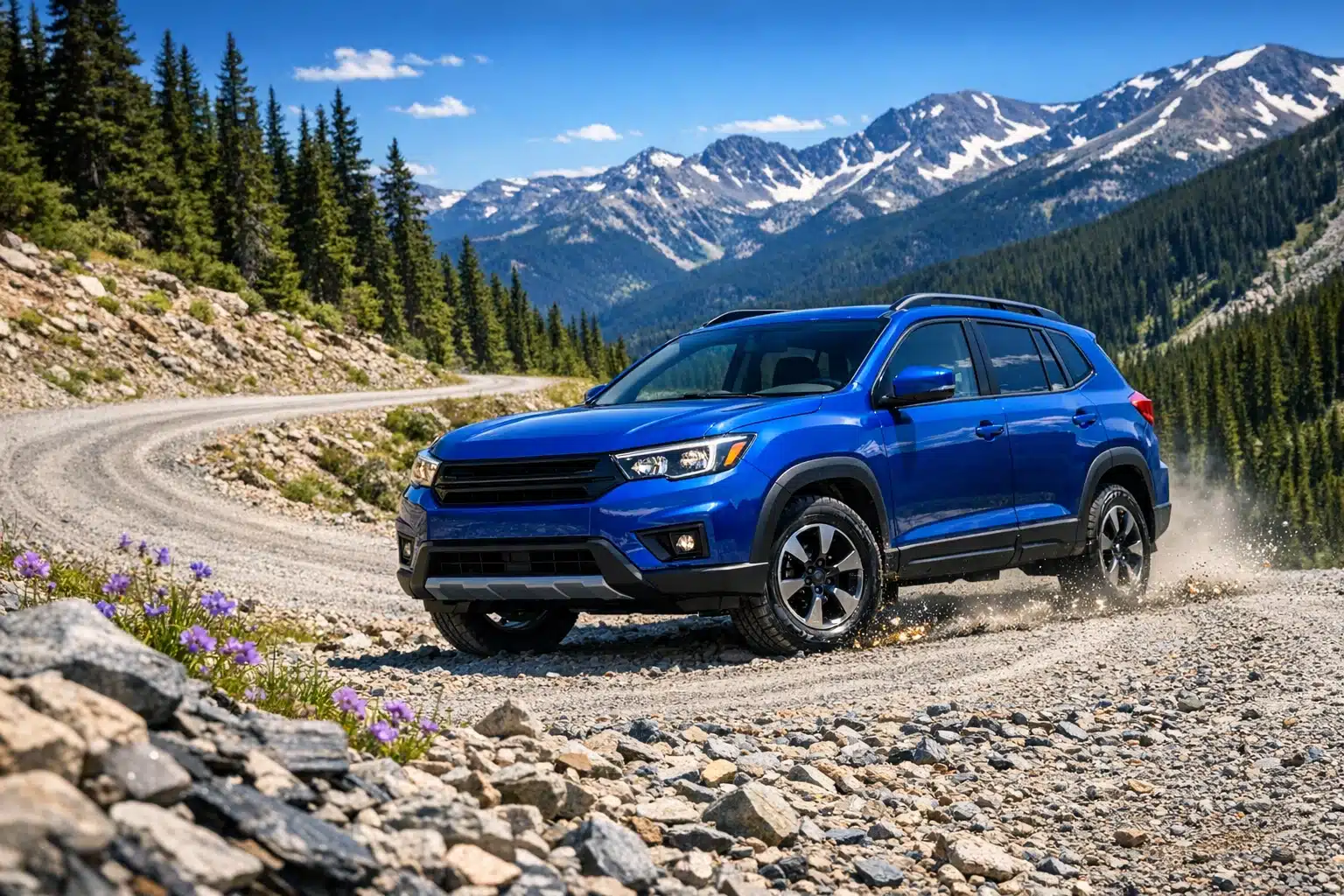
Benefits of Compact 4×4— Efficiency, maneuverability & rugged capability
Compact 4×4 vehicles sit in a useful middle ground: small enough for tight streets, yet capable enough to handle weather and rough tracks that stop ordinary two-wheel-drive cars. Their value is no longer limited to adventure travel, because commuters, rural drivers, and weekend campers all benefit from extra traction used wisely. This article explains how these systems behave on mud, gravel, and snow, then looks at safe climbing, controlled descents, and smart buying choices. Read on if you want practical capability without the cost, bulk, or fuel penalty of a heavy-duty off-roader.
Outline
1. What compact 4×4 means today, and how these systems differ across vehicle types.
2. How mud and gravel challenge traction, steering, and stability in different ways.
3. Why snow performance depends on software, tires, clearance, and driver input.
4. Safe climbing, descending, and the real job of traction control on uneven terrain.
5. How to choose between crossovers, mini-SUVs, and lightweight off-roaders for daily use and occasional adventure.
What Compact 4×4 Really Means Today
When people say “compact 4×4,” they often group together several different ideas: traditional part-time four-wheel drive, modern all-wheel drive, and electronically managed traction systems that mimic locking differentials through braking. In older off-road language, a true 4×4 usually meant a transfer case, selectable modes, and often a low-range gear. In today’s market, especially in smaller vehicles, the picture is broader. Many compact crossovers use on-demand all-wheel drive that sends most power to one axle in normal driving and quickly shifts torque when slip appears. Some mini-SUVs add terrain modes, descent aids, and extra ground clearance, while a few lightweight off-roaders still offer mechanical features that matter when surfaces get loose or steep.
That difference is important because capability is not decided by badges alone. A well-calibrated compact AWD system can feel remarkably secure on a wet hill, a gravel fire road, or a snowy lane, yet it may struggle in deep mud where low-range gearing, aggressive tires, and larger wheel articulation become more important. Buyers often notice horsepower first, but off pavement the useful questions are different:
– How quickly can the system move torque to the axle with grip?
– Can it brake a spinning wheel without overheating?
– Does the vehicle have enough clearance to avoid dragging its underbody?
– Are the tires road-focused, all-terrain, or winter-specific?
– Is the stability software designed to allow a little wheel slip when surfaces are loose?
Many buyers start with a simple goal: Explore compact 4×4 driving solutions — affordable, efficient systems designed for off‑road capability, urban maneuverability, and everyday reliabilit. That line sounds almost promotional until you unpack the engineering behind it. The appeal is real because compact systems reduce weight, improve parking ease, and usually consume less fuel than heavier ladder-frame trucks. A lighter vehicle also places less strain on soft ground, which can help in mud or snow. At the same time, lighter construction may bring compromises in towing, underbody protection, and long-term abuse tolerance.
In practical terms, compact 4×4 ownership is about matching the machine to the mission. Crossovers usually prioritize comfort, efficiency, and wet-road confidence. Mini-SUVs often add chunkier tires, drive modes, and better geometry for rough access roads. Lightweight off-roaders, though fewer in number, keep the formula simple and durable, accepting a noisier ride in exchange for more natural ability on difficult terrain. The smartest way to read the market is not to ask which one is universally better. It is to ask which system remains calm, predictable, and effective where you actually drive.
How Compact 4×4 Systems Manage Mud and Gravel
Mud and gravel may both look like “loose surfaces,” but they challenge a vehicle in very different ways. Gravel often offers a shallow, shifting layer over a relatively firm base. Mud, by contrast, can range from a slick top coating to a heavy, wheel-swallowing mess that clings to tires and steals momentum. Compact 4×4 systems handle these surfaces best when their electronics allow quick torque redistribution and when drivers understand that traction is not a constant; it appears, disappears, and returns in patches. That is why a vehicle can feel planted one second and vague the next.
On gravel, the main goals are stability, controlled wheel slip, and clear steering response. An on-demand AWD system can help by reducing the load on the front tires during acceleration and by calming small slides before they grow. Brake-based traction control can stop one spinning wheel and send power across an axle, while stability control can trim engine output if the rear begins to rotate too quickly. Still, gravel is one surface where too much electronic intervention can feel clumsy. If the system cuts power aggressively, the vehicle may bog down while climbing a loose incline. Better off-road calibrations allow a modest amount of spin so the tire can dig into firmer material underneath.
Mud changes the script. In mud, momentum matters more, steering becomes less precise, and tire tread has a bigger role than the drivetrain alone. Highway-biased tires fill with mud quickly, turning useful grooves into smooth drums. Once that happens, even a capable AWD system has little to work with. Good mud progress usually depends on:
– steady throttle rather than sudden bursts,
– enough wheel speed to clear the tread without digging deep holes,
– a line that avoids the deepest ruts,
– and ground clearance that prevents the body from resting on the surface.
Compact vehicles can surprise people here because lower weight can be an advantage. A lighter crossover or mini-SUV may float over soft ground that traps a heavier machine. But there is a limit. Without all-terrain tires, decent approach angles, and sustained cooling for brakes and clutch packs, repeated mud work can overwhelm compact systems. Gravel usually rewards finesse; mud often punishes hesitation. Imagine a narrow farm track after a storm: one section is scattered stone, the next is polished clay, and the puddle in between hides a rut. That is exactly where software, tires, and driver patience must work together. The best compact 4×4 is not the one that looks toughest in a brochure. It is the one that manages transitions cleanly, keeps steering understandable, and helps the driver keep moving without drama.
Snow, Ice, and the Difference Between Grip and Confidence
Snow gives compact 4×4 systems their most convincing everyday argument. For many owners, the real test is not a wilderness trail but an early commute on untreated roads, a slushy school run, or a driveway that turns steep and slick after dark. On snow, modern AWD and 4×4 systems can improve launch traction, reduce wheel spin, and make corner exits feel less nervous. Yet snow also creates one of the most common misunderstandings in vehicle marketing: four driven wheels help you go, but they do not rewrite the laws of stopping and turning. Tires and driver judgment still decide the outcome.
There are several kinds of winter grip problems, and compact systems handle them differently. Packed snow can be predictable if temperatures are stable and tires are suitable. Fresh deep snow is more about clearance and maintaining motion. Ice is the most difficult because even the best drivetrain cannot create friction where there is very little available. That is why winter tires matter so much. Their rubber compounds stay more flexible in low temperatures, and their tread patterns bite into snow rather than skating across it. In many real-world winter situations, a two-wheel-drive vehicle on proper winter tires will outperform an AWD model on worn all-season tires. The ideal combination, of course, is both.
Snow modes in modern compact vehicles usually soften throttle response, start in a higher gear when appropriate, and shift torque earlier to reduce sudden slip. Some systems also relax or refine traction control so the vehicle can keep crawling through deeper snow without repeatedly cutting power. Useful winter behavior often comes from a bundle of smaller choices:
– narrow, winter-focused tires can improve bite on packed snow,
– a bit of clearance helps the vehicle avoid plowing its floor through drifts,
– heated mirrors and clear visibility matter as much as drivetrain hardware,
– and a smooth right foot prevents the electronics from doing all the work.
There is also a psychological side to snow driving. A compact 4×4 often feels more relaxed and easier to place than a larger truck, especially in urban traffic or on winding country roads. Its lighter steering, shorter wheelbase, and easier recovery from small slides can give the driver more room to think. But confidence must not become overconfidence. Descending an icy hill still depends heavily on speed control, weight transfer, and available friction. Snow is the surface that best showcases the everyday usefulness of compact 4×4 engineering, yet it is also the surface that most clearly exposes poor tires and rushed inputs. In winter, capability is not loud. It is quiet, steady, and unhurried.
Safe Climbing, Controlled Descending, and the True Role of Traction Control
Hills reveal whether a compact 4×4 system is merely helpful or genuinely well integrated. Climbing safely is not about charging at a slope and hoping four driven wheels sort it out. It starts with reading the surface, picking a line, and understanding how weight shifts rearward under acceleration. On loose ground, that rearward shift can help the back axle find grip, but it can also lighten the steering tires. This is why many compact systems try to balance torque carefully rather than sending everything rearward. Too much power, too quickly, can make the front push wide or trigger wheel spin that forces the electronics to cut in hard.
A clean hill climb in a compact 4×4 usually depends on momentum, but not reckless momentum. Drivers need enough speed to avoid bogging down, while keeping the vehicle settled so the tires stay in contact with the surface. Terrain modes can help by adjusting throttle mapping, gearbox behavior, and traction control thresholds. Vehicles with manual gear selection or low first gearing let the driver hold steady torque rather than waiting for an upshift or downshift at the wrong moment. If one wheel lifts slightly over a rut or rock, brake-based traction control can imitate a limited-slip effect by slowing the spinning wheel and sending usable power across the axle. It is clever technology, but it works best in short bursts. Long, repeated intervention builds heat in the brakes and can reduce effectiveness.
Descending brings a different set of problems. Gravity now becomes the main force, and excessive speed turns even a mild track into a test of nerve. Hill descent control, available on many crossovers and mini-SUVs, uses the ABS hardware to pulse the brakes and keep the vehicle creeping at a controlled pace. This is especially useful on muddy or rocky declines where locked wheels would simply slide. Drivers still need to point the car straight, avoid abrupt steering, and let the system work rather than stabbing the brake pedal. Good descent technique often includes:
– selecting a low gear or manual mode when available,
– keeping feet calm and movements gentle,
– avoiding sudden steering changes on loose surfaces,
– and stopping to inspect the path if visibility is poor.
Traction control deserves a balanced view. It is not magic, and it is not a gimmick. Properly tuned, it is a fast-thinking assistant that can keep a compact vehicle moving when one or two wheels lose grip. Poorly timed, or forced to work around unsuitable tires and bad speed choices, it becomes a patch rather than a solution. Picture a steep, rutted lane after sleet: the vehicle creeps, a wheel spins, the system clicks and chatters, and progress resumes inch by inch. That sound is not failure. It is the car negotiating with physics. Safe off-pavement driving in compact 4x4s comes from respecting those negotiations, not overpowering them.
Crossovers, Mini-SUVs, and Lightweight Off-Roaders: Choosing the Right Tool
The compact 4×4 world makes more sense when you stop treating all raised vehicles as one category. Crossovers, mini-SUVs, and lightweight off-roaders may share similar footprints, yet they are built around different priorities. A crossover usually begins with a car-based platform, which means lower weight, better ride comfort, easier entry, and more efficient road manners. Its AWD system is typically optimized for wet tarmac, snow, gravel roads, and occasional rough access routes rather than repeated heavy trail work. For many drivers, that is exactly enough. If most days involve commuting, school runs, shopping, and bad-weather reliability, a well-designed crossover is often the most rational choice.
Mini-SUVs sit a step closer to the rough stuff. They often keep compact dimensions but add higher ride height, more durable lower cladding, selectable terrain modes, and tires with a broader operating window. Some also offer better approach and departure angles, which matter when roads wash out or tracks suddenly steepen. This class tends to appeal to drivers who split their time between town and the outdoors: hikers, anglers, campsite regulars, and people in hilly or rural regions. A mini-SUV will not replace a dedicated rock crawler, but it may be the sweet spot for anyone who wants daily civility without giving up useful extra reach.
Lightweight off-roaders are the niche choice, and that is part of their charm. They often accept compromises in cabin quietness, rear-seat space, or motorway refinement in order to keep mechanical honesty. Compared with road-focused compact SUVs, they may offer simpler drivetrains, more wheel travel, stronger underbody protection, or gearing that makes rough, slow-speed work less stressful. They are not ideal for every household, yet on broken tracks or remote lanes they feel less like polished appliances and more like willing partners.
When choosing among the three, buyers should think in layers rather than labels:
– Daily pattern: mostly city miles, mixed weather, or regular unpaved routes?
– Surface reality: slick boat ramps, forest roads, winter hills, muddy fields, or just rainy motorways?
– Running costs: tire prices, fuel use, service complexity, and insurance class.
– Comfort expectations: quiet cabin, child-seat access, luggage space, and ride quality.
– Upgrade path: whether better tires or underbody protection would solve the real problem better than buying a more extreme vehicle.
The best compact 4×4 is rarely the most dramatic one. It is the one that fits your roads, your climate, and your patience level. A family that spends ten snowy weekends a year at a mountain cabin needs different strengths from a photographer who drives gravel tracks every week, and both need something different from a driver who simply wants extra confidence during winter storms. Capability becomes valuable when it aligns with routine, not when it exists only as a story to tell.
Conclusion for Everyday Drivers and Weekend Explorers
Compact 4×4 systems earn their reputation when they are judged by real conditions rather than heroic imagery. They can make mud less intimidating, gravel more stable, snow more manageable, and steep sections less stressful, especially when paired with suitable tires and calm technique. For urban drivers who still face harsh weather, for rural households balancing rough lanes with school runs, and for outdoor-minded owners who value efficiency as much as access, these vehicles offer a thoughtful middle path. Choose the system that matches your surfaces, respect its limits, and a compact 4×4 can feel less like a compromise and more like a very smart kind of freedom.