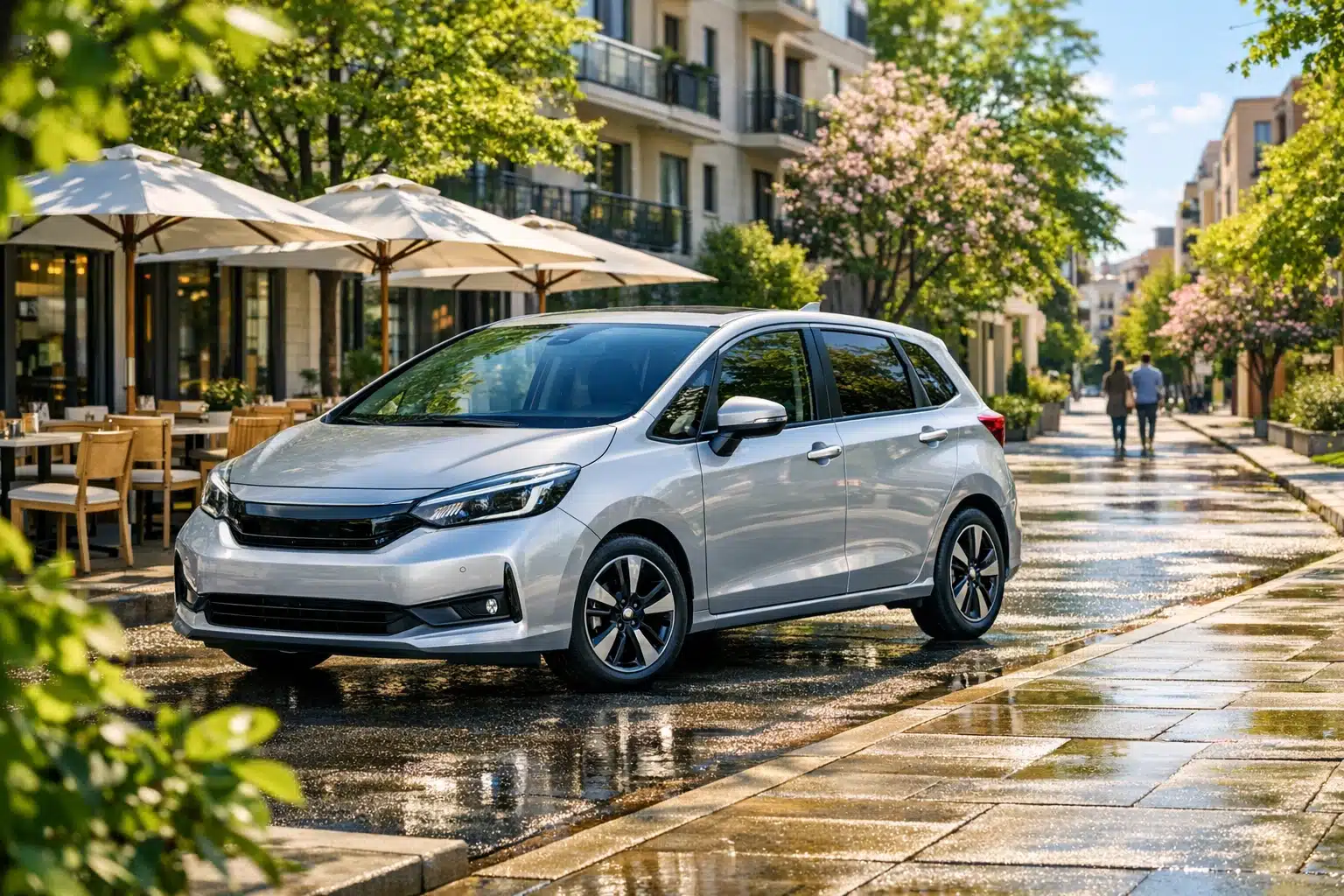
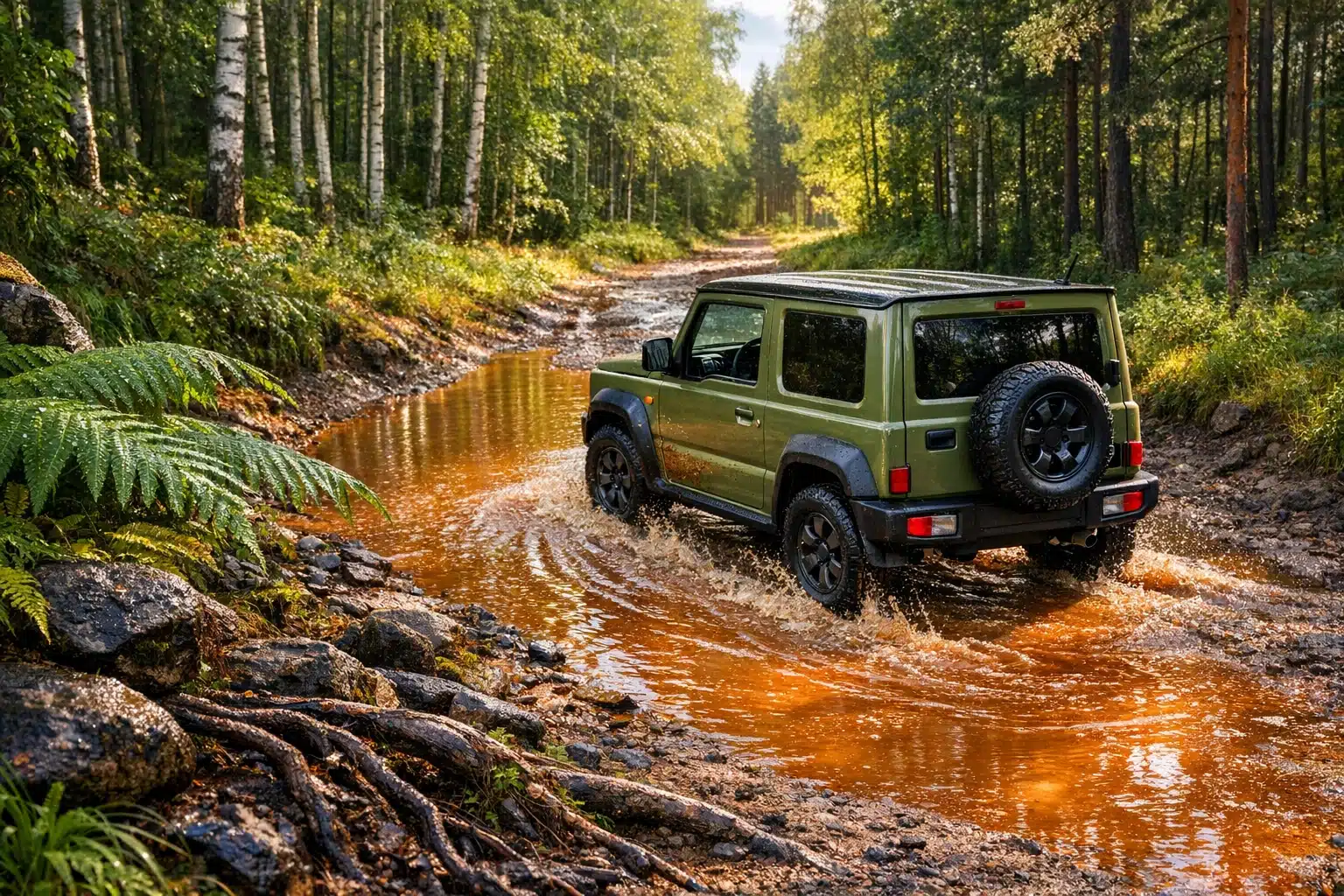
 Artificially generated image
 Benefits of Compact 4×4— Efficiency, maneuverability & rugged capability
Compact 4×4 vehicles have become the quiet problem-solvers of modern driving, slipping through city streets during the week and dealing with rough tracks when the map turns vague. Their appeal is not just adventure; it is confidence on wet roads, better balance on gravel, and useful traction when winter arrives uninvited. Understanding how these systems work helps drivers choose smarter, drive safer, and avoid paying for capability they will never use.
Outline: this article first explains the hardware and logic behind compact 4×4 systems, then looks at how they handle mud, gravel, and snow in real conditions. It follows with a practical section on safe climbing, careful descending, and traction control behavior. The final section compares crossovers, mini-SUVs, and lightweight off-roaders so buyers can match the machine to the life they actually lead.
How Compact 4×4 Systems Actually Work
Explore compact 4×4 driving solutions — affordable, efficient systems designed for off‑road capability, urban maneuverability, and everyday reliabilit. That line captures the core idea, but the engineering deserves a clearer explanation. Most smaller all-wheel-drive vehicles do not use the heavy-duty part-time 4×4 layout once common in large trucks. Instead, they usually rely on an on-demand system with an electronically controlled clutch pack. Under normal driving, most power may go to the front axle to save fuel. When sensors detect slip, steering angle changes, throttle demand, or a sudden speed difference between wheels, the system can send torque rearward in milliseconds.
This approach works well because compact vehicles are expected to do several jobs at once. They must be efficient in traffic, stable on wet pavement, and capable enough for snow, campsites, rutted lanes, or unsealed mountain roads. To achieve that balance, manufacturers often pair the AWD hardware with brake-based traction control. If one wheel spins freely, the system lightly brakes it so torque can move to the wheel with more grip. It is not a locking differential in the old mechanical sense, but it can mimic some of the same effect at low to moderate speeds.
A few design points matter more than the badge on the tailgate:
• Ground clearance affects whether the vehicle will scrape long before traction runs out.
• Tire type often changes real-world grip more than an extra drive mode does.
• Wheelbase influences breakover angle and agility on narrow trails.
• Weight shapes everything from fuel economy to how deeply the vehicle sinks into soft ground.
Compact systems also differ in how proactive they are. Some wait for wheelspin and then react. Others anticipate reduced traction by watching driver inputs and pre-loading the clutch before slip becomes obvious. That is why two similar-looking vehicles can feel very different on the same road. In broad terms, compact crossovers usually favor smoothness and efficiency, while more rugged mini-SUVs or lightweight off-roaders may offer stronger underbody protection, short overhangs, and low-speed calibration that tolerates more wheel movement. The key lesson is simple: a compact 4×4 is not magic hardware, but smart torque management, decent clearance, and the right tires can create surprising capability in a smaller package.
Managing Mud: Momentum, Wheel Slip, and Smart Driver Input
Mud is one of the most misunderstood surfaces because drivers often assume more throttle is the answer. In reality, compact 4×4 systems handle mud best when the driver preserves momentum without creating a storm of wheelspin. Mud varies wildly. Thin, watery mud behaves differently from thick clay, and both differ from muddy tracks with a solid base underneath. If the ground beneath still offers structure, an AWD or 4×4 system can use it well. If the vehicle sinks into deep, adhesive mud, even strong traction software may struggle because the tires stop finding anything firm enough to bite into.
Tire design matters enormously here. Road-focused crossover tires are built for quiet running, low rolling resistance, and wet-road security, but they can clog with mud quickly. An all-terrain tire has wider voids between tread blocks, helping it clear itself as it rotates. Compact vehicles also benefit from being lighter than full-size SUVs, because lower mass can mean less sinking and easier recovery. Still, weight distribution matters. A front-heavy crossover may pull itself through shallow mud, but if the front tires dig ruts and the underbody starts dragging, progress ends fast.
Good mud technique is calm rather than dramatic:
• Select an off-road or mud mode if the vehicle offers one, because it often changes throttle mapping and allows more controlled slip.
• Keep steering inputs smooth; sharp turns increase rolling resistance and scrub away momentum.
• Maintain a steady pace rather than alternating between stopping and flooring the accelerator.
• If the stability system is highly intrusive, use the setting recommended in the owner’s manual for loose surfaces, because full intervention can cut power too aggressively.
Compact 4×4 software often helps by redistributing torque and braking a spinning wheel, but there are limits. Once all four tires become slick with packed mud, electronics cannot create grip from nowhere. Recovery points, a tow strap used properly, and a shovel can be more valuable than another advertised drive mode. Line choice matters just as much: the drier edge of a track, a shallow crown in the middle, or a section with visible gravel underneath may be enough to keep the vehicle moving. Mud rewards preparation and patience, not brute force. Drivers who understand that usually go farther, clean the car less violently afterward, and avoid the expensive lesson of being stuck axle-deep where the adventure brochure stops making sense.
Gravel and Snow: Why Surface Feel Matters More Than Marketing
Gravel and snow are often grouped together because both are low-grip surfaces, yet they ask very different things from a compact 4×4 system. Gravel is loose over a harder base, so tires can move the top layer aside and then regain some purchase underneath. Snow can be powdery, packed, icy, or slushy, and each version changes the rules. On gravel, stability and steering precision are especially important because the surface moves under the tires. On snow, smooth torque delivery and the right tire compound become even more critical, especially when temperatures fall well below the range where all-season rubber performs at its best.
On gravel roads, a well-calibrated AWD system helps the vehicle track with less drama when accelerating out of bends or climbing washboard inclines. The goal is not high speed; it is balance. Many compact crossovers do well here because their lower center of gravity and unibody construction give them composed road manners. However, gravel braking distances can be longer than drivers expect, and ABS can feel noisy or strange as it works over constantly shifting stones. That sensation is normal. The important habit is to brake earlier, leave more space, and look far ahead for changing surface texture, potholes, or embedded rocks.
Snow reveals another truth that buyers sometimes overlook: all-wheel drive improves the ability to get moving, but it does not guarantee shorter stopping distances. Tire choice can matter more than drivetrain layout when roads are cold and slick. Independent tests by automotive clubs and safety organizations regularly show winter tires outperforming all-season tires in braking and cornering on snow and ice. A compact AWD crossover on winter tires can therefore feel more secure than a larger 4×4 on the wrong rubber.
For gravel and snow alike, the best habits are modest and effective:
• Use gentle throttle so the system can meter torque rather than chase spinning wheels.
• Steer progressively and avoid sudden corrections that unsettle the chassis.
• Increase following distance, because low-grip surfaces hide their limits until you need to stop.
• Read the road color and texture; polished snow, deep fresh snow, and dark wet patches all tell different stories.
In short, compact 4×4 systems shine when the driver works with them. Gravel rewards rhythm and observation. Snow rewards patience, seasonal tires, and soft inputs. The electronics are useful, but the real trick is recognizing that surface feel is the language of traction. Once a driver learns to read it, a smaller vehicle becomes far more capable than its tidy footprint suggests.
Safe Climbing, Descending, and the Real Role of Traction Control
Climbing and descending safely is where compact 4×4 vehicles move from convenient transport to serious tools. Even on mild trails, gravity changes everything. When climbing, weight shifts rearward, which can help rear traction but lighten the front tires and reduce steering authority. When descending, the opposite happens: weight moves forward, the front suspension compresses, and the risk of locking into a slide or overwhelming the front tires increases. This is why good technique matters as much as hardware. A driver who understands weight transfer usually gets farther with a modest vehicle than a careless driver with far more equipment.
On climbs, momentum should be measured, not rushed. Enter the slope straight, select the proper mode early, and avoid changing direction sharply once the ascent has started. If the vehicle has a manual shift mode, holding a lower gear often improves control by preventing unwanted upshifts. In a true low-range off-roader, the transfer case multiplies torque and allows slow, deliberate progress, but most compact crossovers do not have that feature. They depend instead on short first gears, torque converter behavior, electric motor assistance in hybrids, or traction software that limits spin. If a climb becomes choppy and the wheels begin hopping, easing slightly off the throttle can help the tires reconnect rather than dig holes.
Descending calls for even more discipline:
• Go slower than feels necessary at the top, because speed builds quickly once gravity takes over.
• Use hill descent control where fitted; it can pulse the brakes at each wheel and maintain a low set speed.
• Keep the vehicle straight whenever possible, since turning on a steep loose slope reduces available grip.
• Stay off sudden pedal inputs, which can overwhelm the surface and trigger a slide.
Traction control deserves special mention because it is often misunderstood. On-road calibration tries to stop wheelspin quickly for safety and refinement. Off-road calibration usually allows more slip before stepping in, because some wheel movement is helpful on loose terrain. That is why many vehicles have snow, gravel, mud, or off-road settings: these modes do more than change a dashboard graphic. They can alter throttle sensitivity, brake intervention, torque split behavior, and transmission response. Still, no mode replaces judgment. If the slope is too rutted, the tires are unsuitable, or the surface is icy beneath wet snow, the sensible choice may be to turn around. Real off-road skill includes knowing when not to continue. That restraint is not timid; it is one of the clearest signs of an experienced driver.
Crossovers, Mini-SUVs, and Lightweight Off-Roaders: Choosing the Right Tool
Not every compact 4×4-shaped vehicle is built for the same mission, and the differences matter more than styling suggests. Crossovers are usually unibody vehicles tuned first for paved-road comfort, efficiency, and cabin space. Their AWD systems are excellent for rain, gravel, ski trips, and badly maintained back roads, but they typically wear road-biased tires and have modest approach and departure angles. Mini-SUVs sit in the middle. Some are essentially tougher crossovers with a little more clearance and better off-road software, while others are genuine small trail machines with short overhangs and more protective underbodies. Lightweight off-roaders go further still, emphasizing mechanical simplicity, better articulation, lower mass, and in some cases low-range gearing.
A few practical distinctions help buyers cut through the noise:
• A crossover usually offers the best fuel economy, easiest entry, and quietest highway ride.
• A mini-SUV often balances daily usability with extra confidence on rough roads and winter surfaces.
• A lightweight off-roader tends to sacrifice some refinement in exchange for better trail geometry and slower-speed control.
Dimensions matter almost as much as drivetrain layout. Many compact crossovers offer ground clearance in the general range of 180 to 210 mm, which is enough for ruts, snow, and uneven forest roads but not ideal for sharp breakovers or deep washouts. Dedicated small off-roaders may exceed that and combine it with shorter wheelbases, making them less likely to scrape or hang up on crests. On the other hand, a short wheelbase can feel busier at motorway speeds, and aggressive tires that shine on trails may generate more noise and consume more fuel. The right choice depends on where the vehicle spends 90 percent of its life, not on the boldest image in a catalog.
For most drivers, the smartest buy is the one that handles everyday duties comfortably and still covers the occasional bad-weather trip or weekend escape. That often means a well-chosen crossover or mini-SUV with good seasonal tires, enough clearance, and honest expectations. Drivers who regularly face rocky tracks, steep descents, deep snow, or muddy work routes may be better served by a lightweight off-roader with stronger underbody protection and slower-speed control. The conclusion is refreshingly simple: capability is not just about having four driven wheels. It is about matching tire choice, vehicle design, electronic strategy, and driving style to real conditions. If you are shopping in this category, focus less on the fantasy of extreme terrain and more on the surfaces you genuinely meet. That is where compact 4×4 ownership stops being a gimmick and starts becoming a practical advantage every time the road gets uncertain.