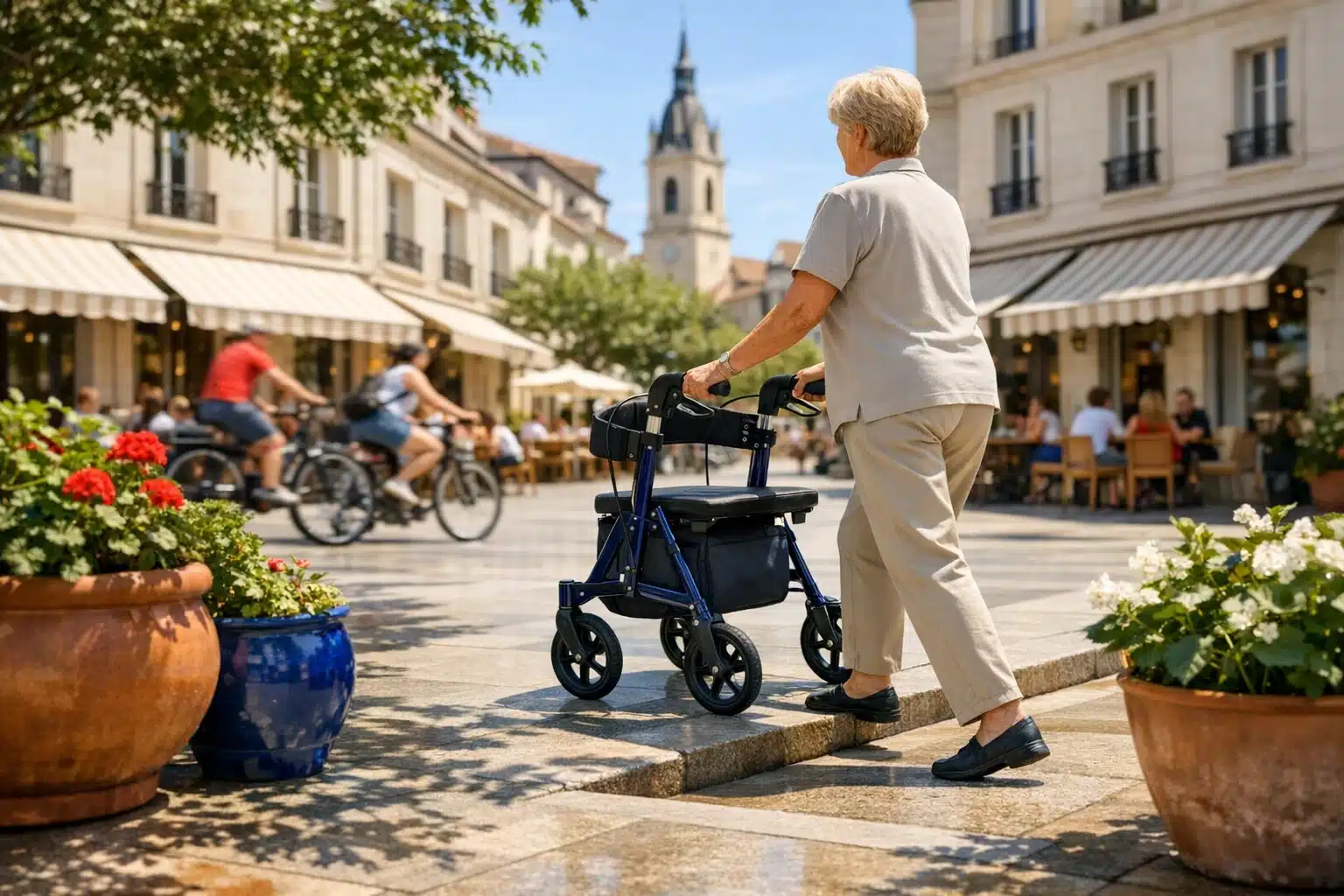
 Artificially generated image
 Modern Mobility Solutions: An Informative Guide to Innovative Alternatives for Seniors’ Independence and Safety
Growing older does not have to mean moving through the day with hesitation or fear. The right mobility aid can reduce fall risk, support better posture, and make ordinary routines such as shopping, visiting friends, or walking to the garden feel manageable again. At the same time, older devices that no longer match a person’s strength or balance can quietly limit confidence. This guide looks at practical options, modern alternatives, and clear signs that it may be time to move beyond a traditional walker.
Outline: This article begins by explaining why mobility support matters for safety and independence, then compares modern alternatives to the classic walker. It continues with a practical framework for evaluating features, fit, and daily usability before looking at the signs that suggest an upgrade is overdue. The final section focuses on making a smooth transition, so seniors and family members can choose with more clarity and less stress.
Why Mobility Support Matters for Everyday Freedom
Mobility changes rarely arrive with a dramatic announcement. More often, they slip into daily life through smaller moments: pausing before a curb, gripping a countertop while turning, or deciding that a short walk is simply not worth the effort. For many older adults, these shifts are not only physical but emotional. A loss of steadiness can make a person cautious, and too much caution can shrink the world one routine at a time. That is why a well-chosen mobility aid should be seen less as a symbol of decline and more as a practical tool for staying involved in ordinary life.
Public health data consistently shows why this topic deserves attention. In the United States, falls affect roughly one in four older adults each year, and they remain a leading cause of injury-related emergency visits among seniors. A device that improves balance, reduces joint strain, or offers a reliable place to rest can therefore do more than make walking easier. It can lower the chance of preventable injury and help people continue activities that support mental health, social contact, and physical conditioning.
The need for support also varies widely. One person may have arthritis and need help reducing pressure on painful knees. Another may have mild balance loss after hospitalization and need extra stability indoors. A third may be strong enough to walk long distances but need brakes, a seat, and storage for outdoor errands. The phrase mobility aid sounds broad because it is broad; not every senior needs the same frame, wheel size, handle design, or turning radius.
Helpful questions often include:
• Does the user feel unsteady when changing direction?
• Is fatigue limiting trips outside the home?
• Are doorways, rugs, or uneven paths creating daily obstacles?
• Does the person need somewhere to sit during longer outings?
When these questions are answered honestly, the conversation becomes less about buying equipment and more about protecting independence. A mobility aid should feel like a bridge back to confident movement. The right choice can restore small but meaningful freedoms, from carrying mail to joining family on a walk, and those freedoms add up faster than many people expect.
Modern Alternatives to the Traditional Walker
The traditional standard walker, often called a pick-up walker, still has an important place in care. It offers a high level of stability, especially for people recovering from surgery or dealing with pronounced weakness. Because the frame is lifted and set down with each step, it can feel secure on even indoor surfaces. The trade-off is speed and convenience. Lifting the device repeatedly takes effort, interrupts walking rhythm, and can become frustrating for someone who wants to move more naturally through home or neighborhood spaces.
This is where modern alternatives become relevant. Two-wheel walkers add front wheels, allowing the user to glide rather than lift the frame fully. Four-wheel rollators go further, using larger wheels, hand brakes, a seat, and often a storage bag. For seniors who still have walking ability but need balance support, a rollator can feel less clinical and more liberating. Upright rollators are another growing option. Their forearm supports encourage a taller stance, which may help users who lean heavily forward and develop neck, shoulder, or upper-back discomfort with lower handles.
There are also lightweight carbon rollators, hybrid rollator-transport chairs, and compact indoor walkers designed for narrow hallways and apartment living. Some models focus on comfort and portability, while others prioritize outdoor performance with larger wheels that handle sidewalks, paving joints, and garden paths more gracefully. A few products add lighting, cane holders, or ergonomic grips. These features are helpful, but they are not magic. A clever accessory cannot compensate for poor fit or limited brake strength.
Useful distinctions to keep in mind:
• Standard walker: highest basic stability, slower pace, best on flat indoor ground
• Two-wheel walker: easier forward movement, still supportive, good for mixed indoor use
• Rollator: smoother travel, seat and storage, useful for active users with reasonable hand control
• Upright rollator: posture-focused design, often preferred by users who stoop
• Transport hybrid: practical for longer outings when walking and seated travel are both needed
A modern alternative to a Gehwagen is not automatically better simply because it looks newer. In fact, some seniors trade too much stability for convenience when they move too quickly to a faster device. The best alternative is the one that matches strength, reaction time, posture, and routine. Think of it like footwear: style matters far less than fit, terrain, and how long you plan to stay on your feet.
How to Compare Mobility Aids for Stability, Comfort, and Safety
Choosing between mobility aids can feel overwhelming because product pages often emphasize ratings, sleek materials, or happy lifestyle photos rather than practical fit. A better approach is to compare devices through the lens of daily use. Where will the aid be used most often? How much hand strength does the user have for braking? Can the frame turn cleanly around furniture? Does the person need to carry groceries, sit during outings, or fold the device into a car trunk? These questions tend to reveal more than marketing language ever will.
Vergleichen Sie die derzeit bestbewerteten Mobilitätshilfen für Senioren für mehr Stabilität und Sicherheit im Alltag.
That comparison should begin with body mechanics. Handle height matters because low handles encourage stooping, while handles that are too high can reduce control. As a general fitting principle, the grips should align near the user’s wrist crease when standing upright with relaxed arms. Seat height matters too on rollators; if the seat is too low, standing up becomes harder, especially for people with hip weakness or knee pain.
Wheel size and braking deserve special attention. Smaller wheels are often fine indoors, but larger wheels generally cope better with outdoor surfaces. Brakes should be easy to squeeze, easy to lock, and easy to trust. If a senior hesitates to use the brakes on a slight slope, that device may not be the right one. Weight is another factor. A very sturdy frame may feel reassuring, but if it is too heavy to fold, lift, or steer, everyday use can become frustrating.
Smart comparison points include:
• width for doorways and bathroom access
• frame weight and folding method
• brake sensitivity and lock position
• grip comfort for arthritic hands
• basket or bag placement
• seat depth and back support
• indoor turning radius versus outdoor wheel performance
Whenever possible, a short trial is worth more than a long list of specifications. A physical therapist, occupational therapist, or trained mobility retailer can often spot issues quickly, such as a gait pattern that calls for more support or a posture problem that suggests an upright design. The best-rated model is not always the best-suited model. Real safety comes from the match between device and user, not from the badge on the box.
When It Makes Sense to Replace or Upgrade an Older Walker
Many seniors keep using the same walker for years because it still appears functional at a glance. The frame stands upright, the wheels turn, and the user has adapted to its quirks. Yet a mobility aid can become outdated long before it becomes obviously broken. Bodies change, routines change, and what worked after one stage of recovery may become limiting later. Replacing a walker is not always about wear and tear; often it is about whether the device still supports safe movement in the life a person is living now.
One clear sign is posture. If the user is leaning heavily forward, shrugging the shoulders, or looking down constantly while walking, the device may be the wrong height or the wrong type altogether. Another sign is speed mismatch. A person who can walk steadily but feels slowed by a pick-up walker may benefit from a wheeled model or rollator. On the other hand, someone who struggles to control a fast-rolling aid may need a more stable option. Needing frequent pauses without a place to sit is also meaningful; in that case, a seated rollator can make shopping trips and appointments far more manageable.
Physical wear matters too. Watch for cracked grips, worn brake cables, unstable folding joints, loose wheels, or locks that fail to hold. These are not minor inconveniences. They can compromise safety at exactly the moment reliable support is most needed. Family members should also notice behavioral clues. If a senior starts avoiding outings, shortening walks, or asking for more arm support than before, the equipment may no longer be doing its job.
Common reasons to consider a switch include:
• recent surgery or illness changed strength or endurance
• the home environment now includes tighter spaces or outdoor use
• the current aid is difficult to transport in a car
• braking requires more hand force than the user can comfortably manage
• the person now needs storage, seating, or better posture support
There is no prize for loyalty to a poorly matched walker. The goal is not to keep the old device going at all costs. The goal is to keep the person moving with less strain, better confidence, and fewer risky compromises. Sometimes the smartest step forward is, quite literally, a different set of wheels.
Making the Switch Safely and Choosing With Confidence
Changing from one mobility aid to another can stir mixed feelings. Some seniors welcome the upgrade immediately because they feel the practical benefits at once. Others hesitate because a new device signals change, and change can be tiring even when it is helpful. The best transition usually happens when the decision is framed around comfort, stability, and continued independence rather than age or limitation. A switch is not surrender. In many cases, it is a thoughtful adjustment that makes daily movement less demanding and more enjoyable.
Start with observation, not impulse. Look at the routes the user actually takes in a normal week: bedroom to bathroom, kitchen to mailbox, elevator to clinic, pavement to grocery aisle. A mobility aid that performs beautifully in a showroom may feel awkward on a front doorstep or impossible in a narrow washroom. If there is any uncertainty, ask for a professional assessment. Physical and occupational therapists can evaluate gait, turning, endurance, and transfer safety, then suggest features that fit real-life needs.
Once a new device is chosen, a short adjustment period helps. Brakes may feel different. Turning radius may change. An upright rollator, for example, can improve posture, but the user still needs time to build a new walking rhythm. Early practice should happen in a low-pressure environment, ideally indoors on clear flooring before moving to curbs, ramps, or crowded public spaces.
A practical transition plan often includes:
• adjusting handle and seat height correctly
• removing loose rugs and clearing tight pathways
• practicing safe braking and sitting techniques
• checking tire wear, screws, and folding locks regularly
• discussing transport, storage, and maintenance before purchase
Cost and coverage also matter. Depending on the country, some devices may qualify for partial reimbursement through insurance, health systems, or community support programs. Even when payment is private, durability and usability should be weighed more heavily than cosmetic style. A cheaper device that is uncomfortable or unstable can become expensive in other ways.
For seniors and the people who support them, the most useful question is simple: does this aid make daily life feel safer and more open? If the answer is yes, the change is likely worthwhile. Good mobility support does not promise perfection, but it can make ordinary days smoother, less tiring, and far more connected to the life a person still wants to lead.