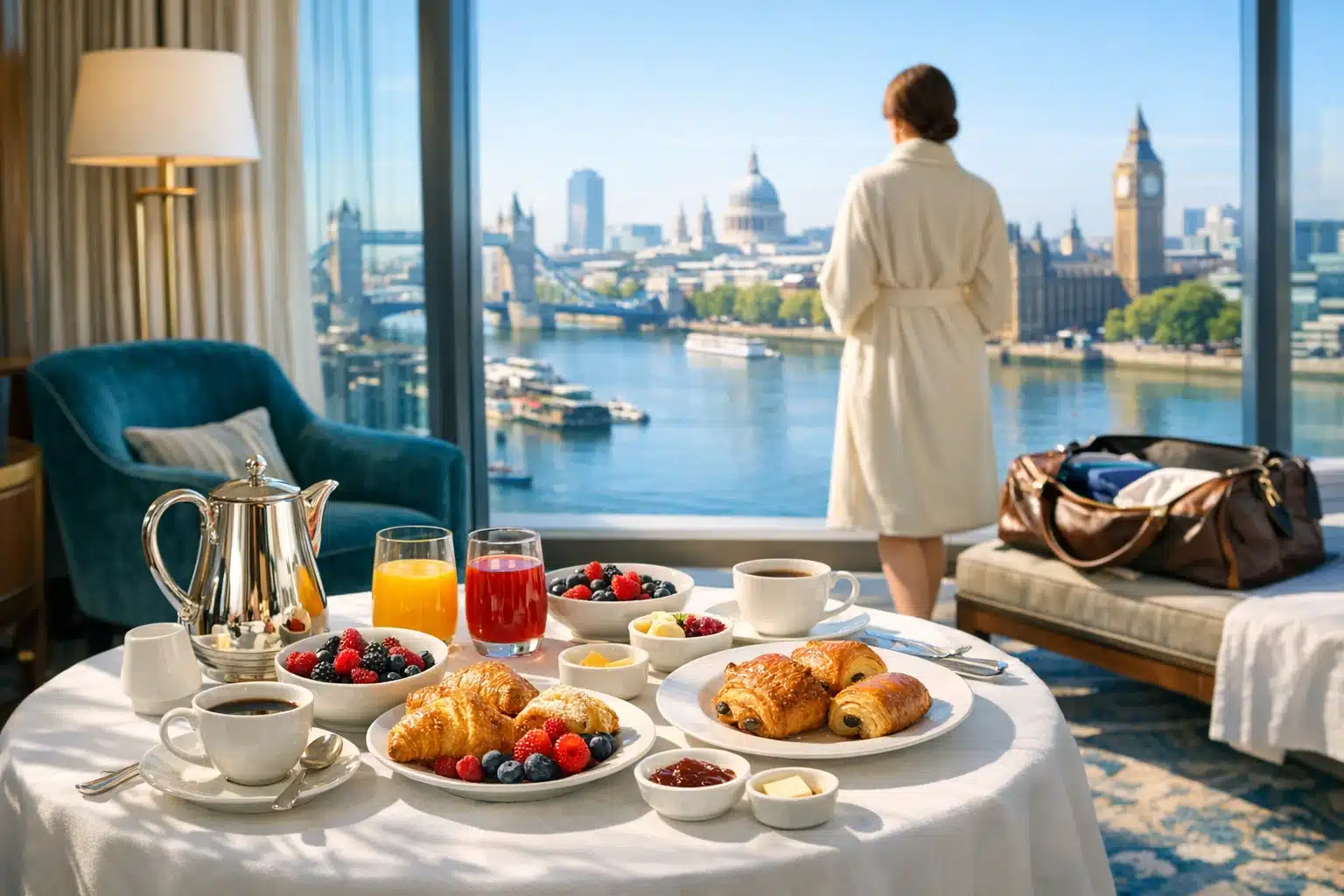
 Artificially generated image
 The 3‑Day London Luxury Hack: All‑Inclusive Stays and Last‑Minute Deals
Luxury in London often sounds like a budget breaker, yet timing, package design, and a sharp eye for culture can change the arithmetic of a short escape. This article explains how a three-day trip becomes more attainable when travelers use flexible dates, value-heavy hotel bundles, and carefully chosen neighborhoods. It also shows where meals, theatre seats, and museum access can quietly replace extra spending.
Outline:
– Why timing shapes price in London’s upscale hotel market
– What all-inclusive really means in a city known more for packages than resorts
– Which premium properties are worth checking for bundled value
– How museums, theatre, and fine dining can be folded into one plan
– A practical three-day strategy for travelers who want style without waste
Why Timing Changes the Price of London Luxury
If there is one idea that separates a costly city break from a clever one, it is timing. London’s hotel market is highly responsive to demand, and premium properties often adjust rates daily based on conventions, school holidays, sports fixtures, fashion events, and business travel patterns. That means the same room can feel wildly overpriced one week and surprisingly reasonable the next. For travelers chasing comfort without carelessness, affordability is not always about choosing a cheaper hotel. Quite often, it is about choosing the right moment to book the better one.
In practical terms, luxury rates in London tend to soften during certain shoulder periods, especially after major holiday peaks or during quieter business weeks. Early January, parts of February, late August, and some stretches in November can present stronger value than spring weekends or December festive dates. The city also behaves differently by district. Hotels in the City of London may ease on weekends when corporate traffic slows, while leisure-heavy areas such as Covent Garden or South Kensington can stay firm when tourists arrive. This is why understanding who usually fills the rooms matters almost as much as understanding the season itself.
Useful timing patterns often include:
– Sunday nights in business-oriented districts, when occupancy can dip
– Short windows after major public holidays, when demand briefly resets
– Last-minute releases of unsold premium inventory
– Midweek dates outside school breaks, when leisure demand is steadier but not frenzied
Last-minute booking, however, is not a magic trick. It works best when you are flexible on neighborhood, room category, or even check-in day. If you must travel during Wimbledon, London Fashion Week, Christmas shopping season, or a bank-holiday weekend, waiting can backfire because prices may rise rather than fall. The smarter approach is to balance courage with structure: monitor rates, set a budget ceiling, and know which amenities would otherwise cost extra. A room that includes breakfast, lounge access, and late checkout can beat a lower base rate with multiple add-ons.
There is also a psychological side to timing. Travelers often book too early from fear or too late from indecision. Both habits can be expensive. A measured strategy works better: watch rates for a few weeks, compare weekdays against weekends, and pay attention to cancellation terms. London rewards those who stay alert. Like the city itself, the market moves fast, but it does leave small elegant gaps for people who notice them.
What All-Inclusive Means in a City Like London
When people hear the phrase all-inclusive, many picture a beach resort where every meal, drink, and activity is folded into one wristband-ready rate. London works differently. It is a global city with layered neighborhoods, independent restaurants, theatre districts, museum clusters, and hotels that rarely operate on a classic resort model. That does not mean all-inclusive value is absent. It simply appears in a more urban, modular form, usually through curated packages, half-board offers, dining credits, chauffeur transfers, lounge access, attraction tickets, and premium extras that reduce spending once you arrive.
This distinction matters because a city break can become unexpectedly expensive through small separate purchases. Breakfast for two at a luxury hotel may add a substantial amount to the final bill. A private airport transfer can cost as much as a good pre-theatre dinner. Late checkout, spa access, cocktails, and ticket booking fees quietly stack up. A well-built package absorbs some of those costs in advance, making the total easier to understand. That is the true London version of all-inclusive: not endless buffet lines, but fewer financial surprises.
When comparing offers, it helps to divide them into three broad types:
– Hotel-led packages, often including breakfast, dining credit, or a welcome amenity
– Travel bundles from tour operators or luxury agencies, sometimes pairing flights, room upgrades, transfers, and cultural tickets
– Experience packages built around a theme, such as theatre weekends, museum breaks, or celebratory dining stays
The most useful packages tend to include benefits that are both expensive and likely to be used. Breakfast is valuable if you plan early museum visits. A dinner credit is strong if the hotel has a respected restaurant or if neighborhood dining is costly. Theatre tickets become meaningful when you are staying near the West End and can walk back instead of paying for extra transport. Lounge access is especially effective in London, where afternoon refreshments, evening canapés, and a quiet place to pause can replace outside spending more elegantly than travelers expect.
It is equally important to read the terms with care. “Included” does not always mean unlimited, and “credit” does not always cover the full cost of a meal. Some packages are generous but narrow, while others look simple yet save more in reality. The key question is not whether an offer sounds luxurious. It is whether the inclusions match the way you actually travel. In London, value belongs to fit, not flash. The best package is the one that lets you move through the city with fewer decisions, fewer extra charges, and more room to enjoy what you came to see.
Top London Properties That Frequently Shine in Value-Rich Luxury Packages
True resort-style all-inclusive hotels are rare in central London, but several premium properties regularly stand out in package-based city breaks that feel close to all-inclusive when the extras are strong enough. The smartest way to read these hotels is not to ask whether every expense is covered. Instead, ask which property gives you the most usable value once room quality, location, dining, and access to cultural districts are considered together. That is where luxury becomes practical rather than ornamental.
Corinthia London is often one of the first names worth checking. Its position near the South Bank, Trafalgar Square, and the West End makes it especially effective for short stays built around theatre and landmark sightseeing. Packages here can become attractive when they include breakfast, spa access, or dining elements, because the hotel itself is a destination and the location cuts down on wasted travel time. For travelers who want polished service and a grand sense of arrival, it frequently earns its premium through convenience as much as style.
The Langham, in Marylebone, works well for guests who want classic London luxury with strong transport links and easy access to shopping, galleries, and restaurant districts. When bundled with breakfast, room upgrades, or club benefits, it can represent excellent urban value. Shangri-La The Shard, London offers a different appeal entirely: dramatic skyline views, a distinctly modern feel, and a strong sense of occasion. It is often better suited to travelers prioritizing memorable atmosphere, especially if a package includes food and beverage credit that offsets its naturally elevated on-site pricing.
Other strong contenders include:
– The Rubens at the Palace, for travelers who value royal-adjacent location and traditional hospitality
– Sea Containers London, for a lively South Bank base with quick access to culture and river views
– The Savoy, when a special package softens the cost of one of the city’s most iconic addresses
– The Biltmore Mayfair or similar Mayfair properties, where dining credits and late checkout can materially improve value
Discover the 3‑day London luxury hack — all‑inclusive stays with last‑minute deals that combine affordability, comfort, and unforgettable experiences.
That line sounds bold, but the principle behind it is grounded: pick a top-tier property only when the package makes the total spend more sensible than a bare room rate elsewhere. The winning hotel is rarely the cheapest on paper. It is the one that aligns with your three-day priorities. If theatre is central, stay closer to the West End. If museum time matters more, favor South Kensington or a well-connected area on the Tube. If this is a celebratory escape, choose the property whose dining and room experience reduce the urge to spend heavily elsewhere. London luxury becomes far more attainable when the hotel does not merely house the trip but actively carries part of its cost structure.
When Museums, Theatre, and Fine Dining Are Part of the Package
One of the most effective ways to judge a London luxury deal is to look beyond the room and ask what kind of city access it creates. For many travelers, the real appeal of London lies not in staying indoors but in stepping directly into culture. A package that includes exhibition tickets, pre-theatre dining, concierge-booked seats, or a meaningful restaurant credit can outperform a more glamorous room with no extras at all. In a city where premium experiences can accumulate quickly, curated cultural inclusion is often where the budget begins to breathe.
Museums are a perfect example. Many of London’s major national museums offer free general admission, including the British Museum, the National Gallery, the Victoria and Albert Museum, and the Natural History Museum. Yet the story does not end there. Special exhibitions are often ticketed, some attract timed-entry demand, and a short stay leaves little room for administrative friction. A package or concierge arrangement that secures exhibition access, early planning, or transport-smart scheduling can save both money and hours. Time is not just sentimental value on a three-day trip. It is part of the budget.
Theatre is even more obviously tied to package value. West End tickets vary widely, and popular productions can make spontaneous booking expensive. If your hotel includes a theatre component or can access preferred rates through a package partner, the benefit may be meaningful. Better still, a hotel near Covent Garden, Soho, or Trafalgar Square lets you walk to the show, avoid unnecessary cabs, and return at ease after a late curtain. The pleasure of seeing London by night, coat collar up and lights reflecting on wet pavement, is hard to price, but it certainly feels richer when the logistics are simple.
Fine dining inclusion deserves equal attention because meal costs in London can expand rapidly. A few patterns are especially useful:
– Breakfast included at a luxury property can save a notable amount each morning
– Set lunches at acclaimed restaurants often provide better value than dinner tasting menus
– Pre-theatre menus can make high-quality dining more accessible before an evening show
– Hotel dining credits are strongest when the restaurant is genuinely good, not merely convenient
Neighborhood choice shapes these benefits. South Kensington suits museum-focused travelers. Covent Garden and nearby areas favor theatre lovers. Bankside blends contemporary art, river walks, and stylish dining. Mayfair and Marylebone support shoppers and restaurant enthusiasts who want polished surroundings throughout the day. The smartest package joins place and purpose. It does not throw in random extras. It builds a coherent experience where culture, food, and comfort reinforce one another. That is how a London stay stops feeling like a string of separate purchases and starts behaving like a complete, elegant plan.
A Three-Day Luxury Plan and Final Takeaway for Smart Travelers
Once timing, package design, and cultural inclusions are understood together, a three-day London luxury trip becomes far easier to shape. The best version is rarely crammed. Instead, it is edited. You choose one strong hotel, a handful of meaningful experiences, and enough flexibility to enjoy the city without turning every hour into a transaction. Luxury, after all, is not only about thread count or chandeliers. It is also about ease, flow, and the absence of avoidable stress.
A practical three-day structure might look like this. On day one, arrive using an included transfer or a route that keeps costs low, settle into a centrally located hotel, and use an included lounge, afternoon tea, or dining credit rather than rushing out immediately. Spend the evening close to the property so the city opens gently. On day two, focus on a cultural anchor such as a major exhibition, a gallery cluster, or a theatre night. Build the rest of the day around geography so you are not crossing London repeatedly. On day three, use breakfast and late checkout to stretch value, fit in a final museum or shopping visit, and leave without paying extra for hurried logistics.
This approach works especially well for:
– Couples planning a short celebratory escape
– First-time visitors who want iconic experiences without scattered spending
– Solo travelers who value safety, comfort, and efficient locations
– Busy professionals adding leisure to a work trip
– Repeat visitors who prefer depth over checklist tourism
The audience most likely to benefit is not necessarily the one with the biggest budget. It is the traveler willing to compare total trip value instead of reacting only to the nightly rate. A cheaper room far from your priorities can generate more transport costs, more impulse spending, and more fatigue. A slightly higher package in the right place may include breakfast, reduce decision-making, and place you within walking distance of the experiences you care about most. That is not indulgence without thought. It is spending with structure.
In the end, the London luxury hack is simple but not simplistic. Watch the calendar, look for value-rich bundles rather than stripped rates, and choose a hotel that supports your cultural goals. If museums, theatre, and fine dining are part of why you are coming, let them be part of the booking logic from the start. For travelers who want elegance without waste, a three-day London stay can absolutely feel upscale and financially sensible at the same time. The city still sparkles; you just meet it with a smarter map in hand.